
A full container of one product is a stable load. Every carton is the same footprint, every pallet stacks the same way, and the weight settles evenly. A mixed container is not. Half pallets of pomegranate sit beside cartons of onion and a few pallets of IQF, each with different carton dimensions, different weights and different tolerance for compression. Packaging is what holds that load together, and it is the part mid-size buyers most often leave to the exporter.
Carton grade matters more in a mixed load
Corrugated board is rated by edge crush and bursting strength. In a single product container the stack height is uniform and the load is engineered around one carton. In a mixed load a light fruit carton can end up carrying pallets that were not planned for it, or sitting against a heavier stack that shifts. For part loads Peivana specifies double wall board on anything below the top tier and single wall only where the carton stays on top. It is a small cost difference per unit and it removes the most common cause of crushed arrivals in groupage.
Ventilation is the second variable. Fresh produce cartons need hand holes and vent slots aligned vertically through the stack so cold air can move. A carton with generous ventilation is structurally weaker, which is the trade off. Aligning vents pallet to pallet during loading matters more than adding more of them.
Liners, sleeves and trays
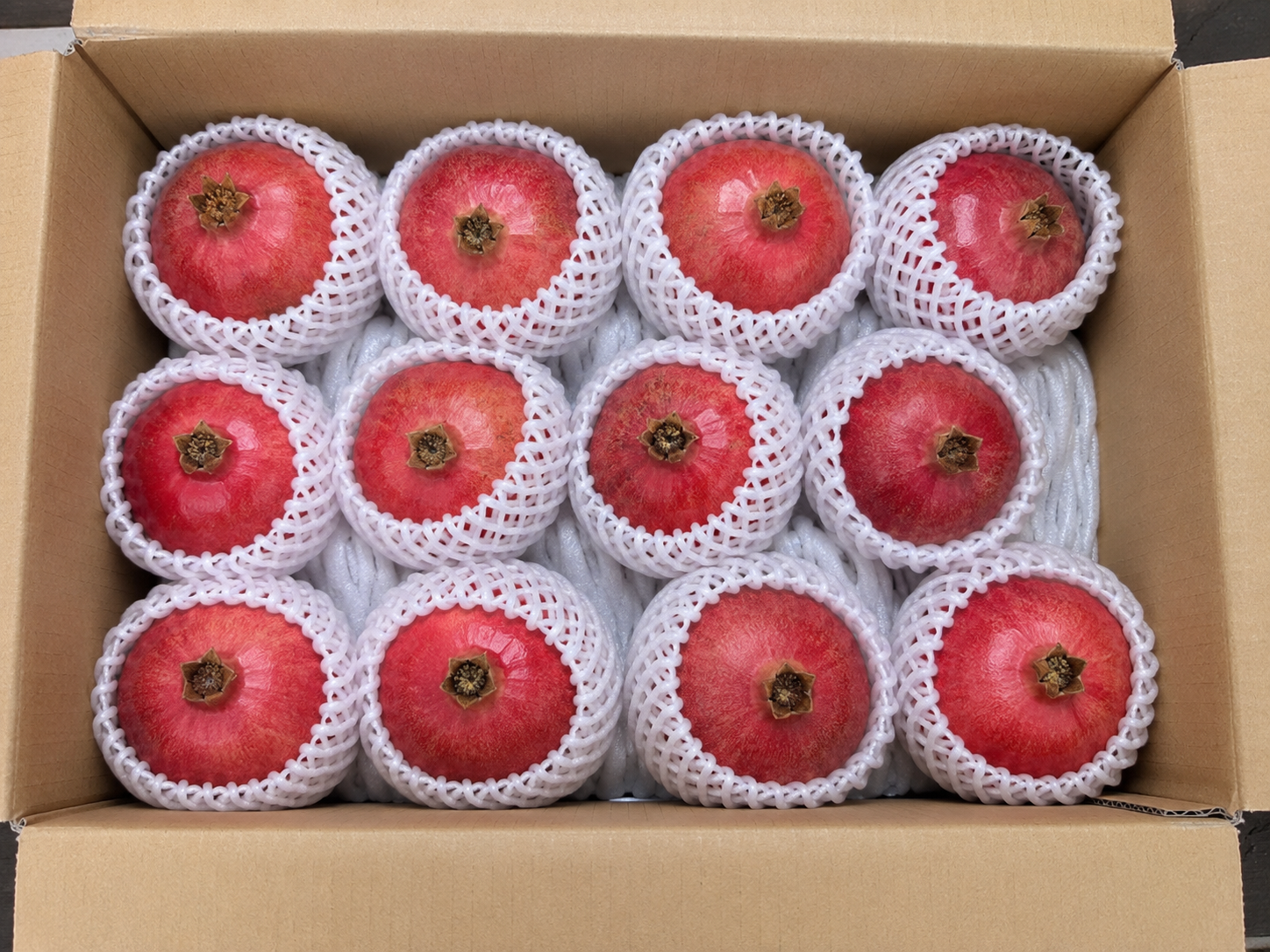
Foam net sleeves are standard on pomegranate, mango and premium citrus. They absorb impact and stop fruit rubbing against fruit during the road leg after discharge, which for most mid-size buyers is longer than the sea leg was. On smaller counts the sleeve also fills space and prevents movement inside a partly filled carton.
Perforated polyethylene liners are used on citrus and onion to manage moisture loss without trapping condensation. The perforation rate is the point to specify, not the presence of a liner. Unperforated liners belong only on IQF and frozen product, where the food grade polybag inside the carton is a barrier rather than a humidity tool.
Plastic trays and pulp trays are worth the cost on soft fruit travelling in a mixed load, because the fruit cannot rely on a uniform stack around it. On firmer product they add weight and cost without much benefit.
Pallet build, corner boards and wrap
Mixed containers usually run on 100 x 120 cm export pallets, often as half pallets to make the mix work. Half pallets are less stable by nature, which makes corner boards and strapping close to mandatory rather than optional. Two vertical corner boards on each corner with horizontal strapping at two heights holds a half pallet through handling far better than wrap alone.
Stretch wrap should not seal the pallet. Wrapping tightly from top to bottom on a reefer pallet blocks the vertical air flow the vent slots were designed for. The working practice is to wrap the bottom tiers for stability and leave the upper section open, or to use net wrap.
How much of each product actually fits once the pallet build is decided is a separate calculation, and we set it out in our note on pallet maths for mixed containers.
Branding without compromising the pack
Buyers taking own brand cartons sometimes specify a print finish that changes the board performance, or a design that covers vent slots. Neither is necessary. Print and structure can be handled separately, and our guide to own brand cartons on Egyptian produce covers minimum quantities and lead times for artwork.
Specify it once
The simplest approach is to agree a packaging sheet per product at the start of the relationship: board grade, carton dimensions, vent pattern, liner or sleeve type, tray, pallet size, corner board and strapping. It then applies to every order, mixed or full, without renegotiation.
To receive a packaging sheet for the products in your next mixed container, or to review carton options and costs, contact Peivana on WhatsApp at +20 10 9911 1918.