Eastern Europe produce imports from Egypt move through three sea gateways, and picking the wrong one adds a week to your transit or three hundred kilometres to your truck. Constanta serves Romania, Bulgaria and Moldova. Koper serves Slovenia, Hungary, Czechia, Slovakia and Austria. Gdansk serves Poland and the Baltics. For a mid-size buyer taking a few pallets rather than a full reefer, the gateway also decides which consolidation service you can join.
The three gateways compared
| Gateway | From | Transit | Serves | Inland leg |
|---|---|---|---|---|
| Constanta | Alexandria, Damietta | 7 to 10 days | Romania, Bulgaria, Moldova | Bucharest 3 h, Sofia 8 h |
| Koper | Alexandria, Damietta | 8 to 12 days | Slovenia, Hungary, Czechia, Austria | Vienna 6 h, Budapest 7 h |
| Gdansk | Damietta, Port Said | 14 to 20 days | Poland, Lithuania, Latvia | Warsaw 5 h, Vilnius 9 h |
Transit figures are port to port on the services running in the 2026/2027 season and exclude the inland leg and clearance. Gdansk is a long haul because most Egyptian volume transships in the Western Mediterranean, which adds a discharge and reload. If your delivery point is Warsaw and your product is short-lived, Koper plus a truck is often quicker than Gdansk direct even though the map suggests otherwise.
What clearance looks like at each border control post
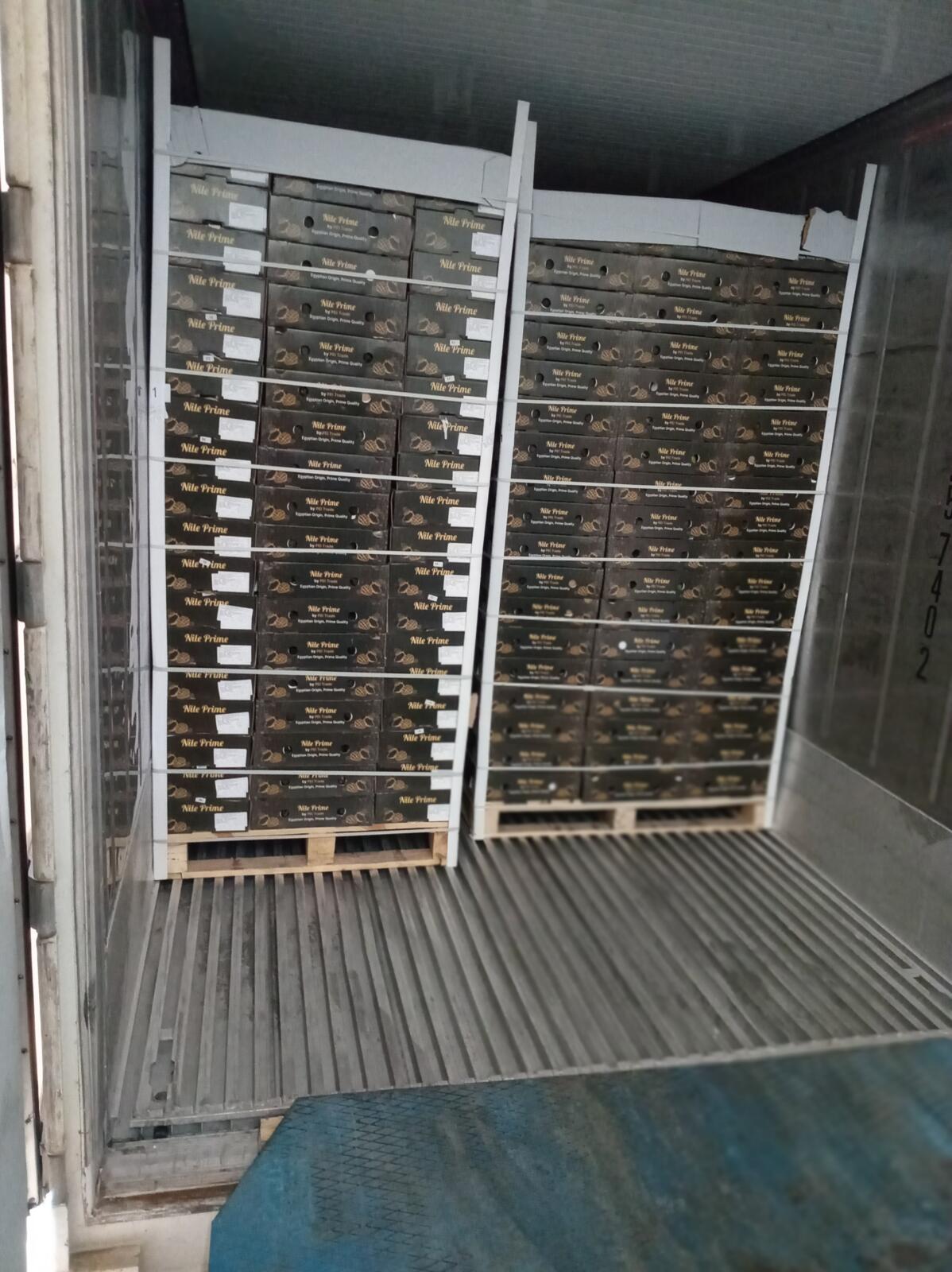
All three gateways are EU border control posts, so the requirement is the same: a CHED-PP raised in TRACES NT before arrival, an original phytosanitary certificate travelling with the shipment, and a documentary check that is followed by an identity and physical check at the frequency set for that commodity. What differs is throughput. Constanta and Koper handle large reefer volumes and are used to consolidated loads with several consignees on one bill of lading. Smaller BCPs are not, and a shared container that arrives with six CHEDs attached can sit while the paperwork is unpicked.
For a part-load buyer that has one practical consequence. Ask your supplier which consignee structure the consolidation uses before you book. If the container moves under a single master bill to a consolidator who then splits it in a bonded warehouse, your CHED is raised on your own house bill and your clearance runs independently of the other buyers on the box. If everyone clears at the quay, one buyer’s missing document holds your pallets too. The full EU sequence is set out in our guide to Egyptian part-loads into the European Union.
What actually loads to the region between October and March
Egyptian supply into Eastern Europe is counter-seasonal, which is why the window opens as local production ends. Valencia and Navel orange, Murcott mandarin and lemon carry the volume from December. Pomegranate runs from late September to December. Sweet potato, green beans and sugar snaps fill the winter vegetable slots, and fresh strawberry starts in December for buyers who can take air freight or a fast reefer. Our regional overview of counter-season Egyptian supply into Poland and Czechia covers the demand pattern in more detail.
Minimum quantities are lower than most buyers assume. A half pallet of 50 to 60 cartons is enough to take a position on a shared reefer, and three or four half pallets of different products make a workable first order for a regional wholesaler testing Egyptian origin.
Peivana is an Egyptian exporter, not a neutral reviewer. Transit and inland figures are indicative for the 2026/2027 season and should be confirmed per sailing.
Want a quote for a part-load to Constanta, Koper or Gdansk? Send your products, quantities and delivery week to Peivana on WhatsApp at +20 10 9911 1918 and we will come back the same day with the routing and a price per carton.