Nordic and Baltic buyers ask a version of the same question: is a part-load from Egypt worth doing when the container has to change hands twice before it reaches us. The honest answer is that it depends less on distance than on how the transhipment is arranged and which products are in the load. This note sets out how the lane actually works for a mid-size buyer taking one to six pallets.
How the routing works
There is no meaningful volume of direct reefer service from Egyptian ports to Scandinavian or Baltic ports. Almost everything moves in one of two ways.
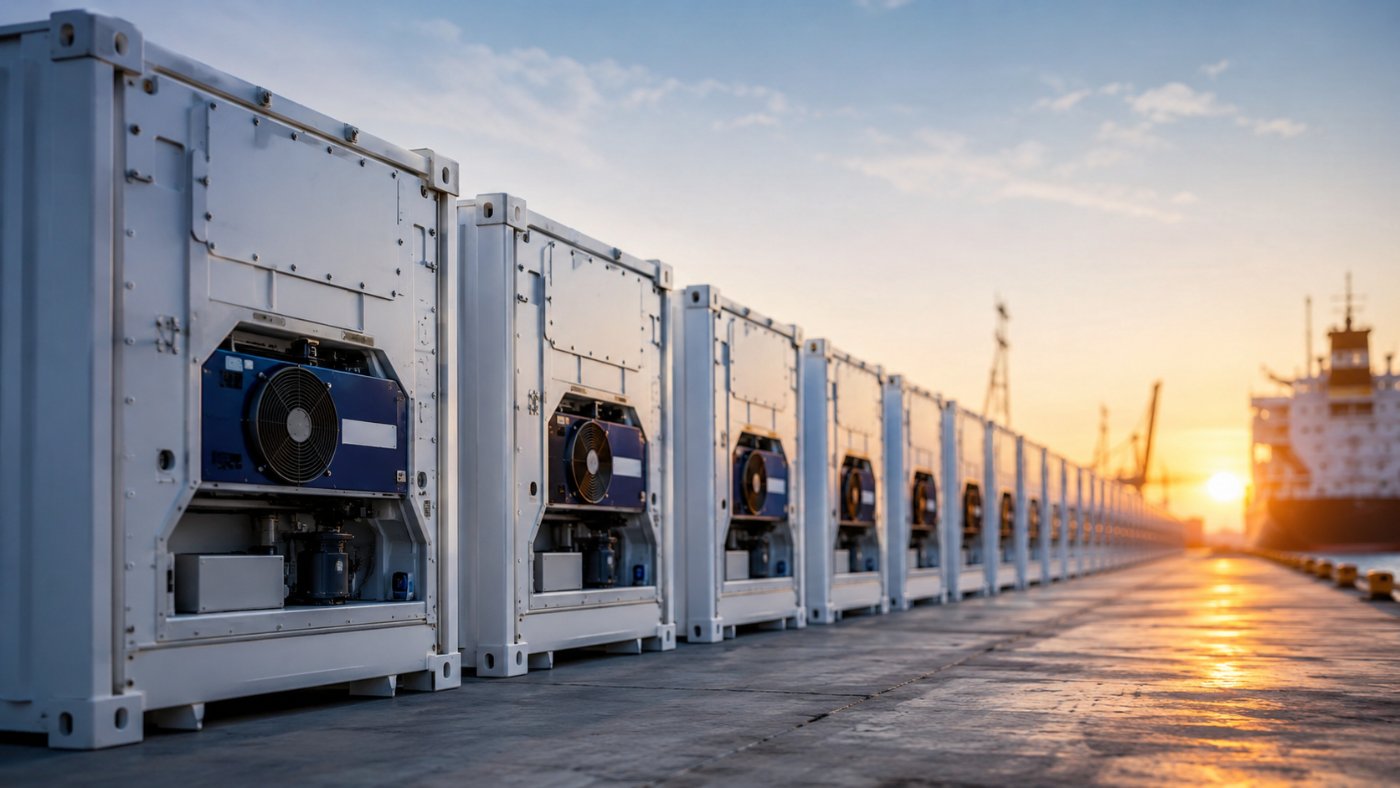
The first is ocean transhipment. The container sails from Alexandria, Damietta or Port Said to a North European hub, most commonly Rotterdam, Antwerp, Hamburg or Bremerhaven, and is relayed onto a feeder to Gothenburg, Aarhus, Helsinki, Gdansk, Klaipeda or Riga. The cargo stays in the box the whole way.
The second is hub-and-truck. The container is discharged and devanned at a North European hub, your pallets are picked out, and they travel onward by refrigerated road transport. For one or two pallets this is usually cheaper and often faster than waiting for a feeder slot, and it is how most Egyptian groupage reaches Norway, which sits outside the EU customs union and is handled separately.
Which one you get is a commercial decision, not a technical one, and it should be stated on the booking. A quotation that says only “CFR Gothenburg” without naming the transhipment arrangement is incomplete.
Realistic transit
Egypt to a North European hub is broadly two weeks of sailing on the main services. Add the hub dwell, which is where the variability lives, and then the onward leg. For planning purposes, count roughly three weeks to the hub gate and then three to seven days onward to most Nordic and Baltic delivery points, longer to northern Finland and northern Norway.
The number that matters is not transit, it is shelf life left when the pallet reaches your warehouse. On a lane this long that has to be calculated before the order is placed, not discovered afterwards. Our note on shelf life left on arrival gives the product-by-product arithmetic.
Border control and documentation
For the EU members on this lane, Sweden, Denmark, Finland, Estonia, Latvia, Lithuania and Poland, the plant health check happens at the first EU border control post, which on a transhipped container is the hub, not your local port. Pre-notification goes in ahead of arrival and the phytosanitary certificate must match the consignment exactly. If the container is devanned at the hub and your pallets travel on by road, the goods are already in free circulation by the time they reach you and the onward leg is a domestic movement.
Norway is the exception and needs its own import handling. Confirm who is filing what before the vessel sails rather than while the pallets sit at the hub. The general EU-side sequence is covered in our note on Egyptian part-loads into the European Union.
What suits the lane
Long transit rewards robust product. Onion and garlic in mesh bags, sweet potato and other cured roots, pomegranate, citrus, dates, and frozen IQF lines all travel this distance comfortably. Citrus in particular fits, because the Egyptian window from December through May sits squarely in the Nordic winter when local supply is nil and the alternative is Spanish or Moroccan fruit at a different price point.
Fresh herbs, fine beans, table grapes and soft fruit are harder to justify on a transhipped lane. They can be done, but the shelf life left on arrival is short enough that the order only makes sense against a confirmed customer rather than into stock.
Practical points before you book
Ask for the routing in writing, including the hub and whether it is feeder or road onward. Ask for the cut-off and the hub dwell allowance, not just the sailing date. Agree what happens if the box is rolled at the hub, because on a two-leg lane a roll costs more days than it does on a direct service. Fix the set point in the contract, since a mixed part-load travels at one temperature and the compromise has to be one your products can take.
Peivana ships mixed part-loads from Egypt in quantities from a single pallet, with GLOBALG.A.P and BRC certified supply and same-day quotations. To price a Nordic or Baltic part-load, message us on WhatsApp at +20 10 9911 1918 with your delivery town, the products and quantities you want, and your target delivery week, and we will come back with a routing and a price.