
Egyptian part-loads into the GCC are the shortest and most forgiving lane Egypt runs. Transit from the Red Sea to Jeddah is a matter of days rather than weeks, Jebel Ali and Doha are reachable within a normal shelf-life window on almost every product, and the volume threshold is low enough that a mid-size buyer can order half a pallet of four products rather than a container of one.
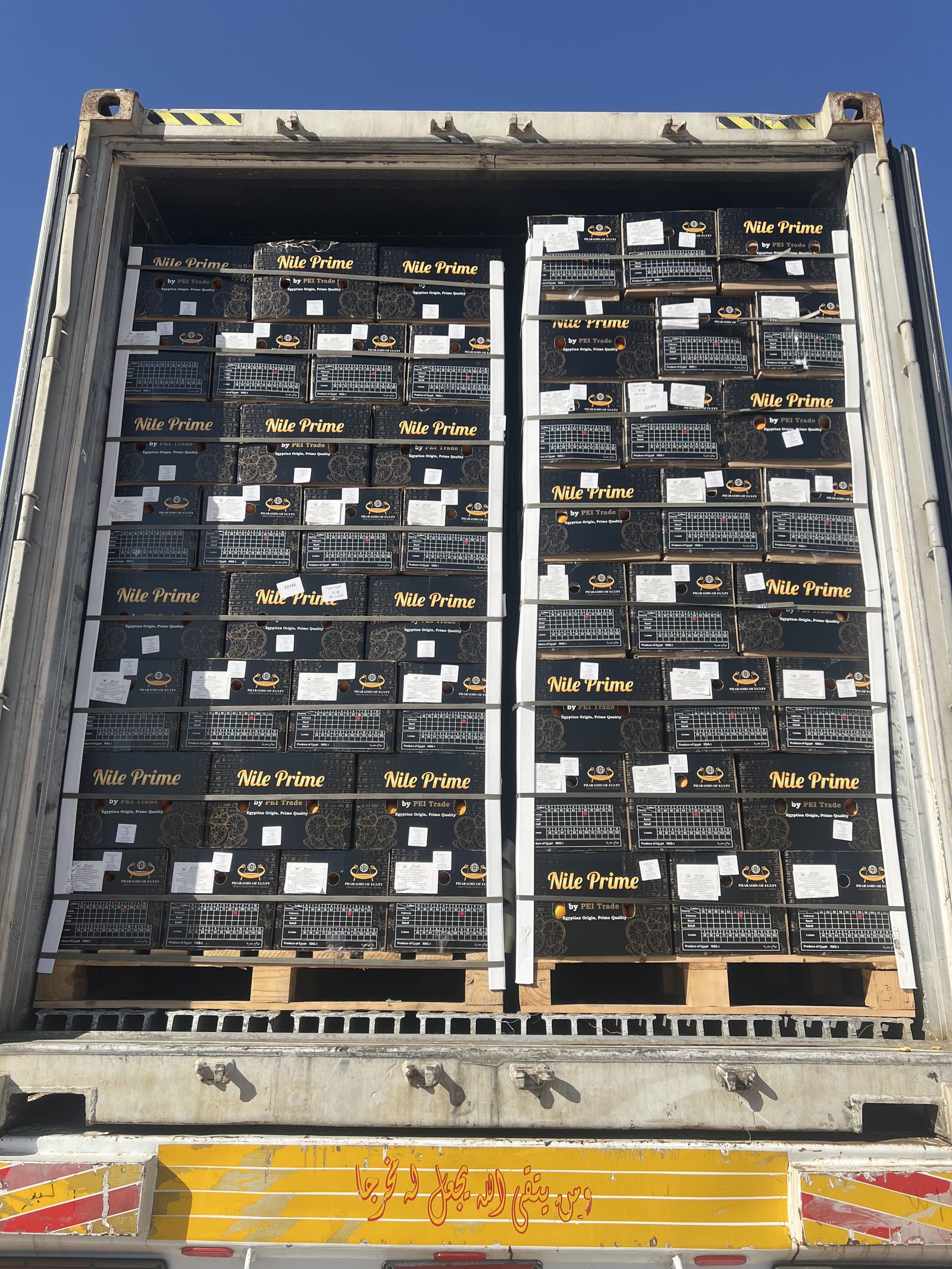
Ports and indicative transit
| Destination | Usual load port | Indicative transit | Notes |
|---|---|---|---|
| Jeddah | Sokhna | 3 to 6 days | Shortest lane, direct services |
| Dammam | Sokhna or Damietta | 8 to 14 days | Often via a Gulf transhipment hub |
| Jebel Ali | Sokhna or Damietta | 7 to 12 days | Widest sailing choice in the region |
| Doha (Hamad) | Sokhna or Damietta | 9 to 15 days | Usually transhipped |
| Sohar and Salalah | Sokhna | 7 to 12 days | Useful relay for inland Oman |
| Kuwait (Shuwaikh) | Damietta | 10 to 16 days | Fewer direct calls, book earlier |
Sokhna is the natural port for the Red Sea and Gulf because it avoids a Suez northbound leg. Damietta and Alexandria still serve the region well and often carry a better sailing frequency, so the right port depends on the week you want to load rather than on geography alone. Reading the schedule properly matters more here than on a long lane, and our note on reading a reefer sailing schedule from Egypt covers cut-offs and transhipment risk.
What the Gulf importer needs in place
Fresh produce is the lightest regulated category in the region, but the importer of record still needs to be registered with the national food authority before a consignment can clear, and consumer-facing packs generally need Arabic labelling. Frozen lines carry more requirements than fresh, including a health certificate and, in several markets, a minimum remaining shelf life at the point of entry. Confirm those thresholds with your clearing agent before contracting, because a frozen part-load that arrives inside the remaining shelf-life limit cannot be fixed at the port.
On a shared container the certificate set is issued for the whole load and split between buyers, so name the consignee correctly on the booking. The mechanics of that split are covered in our note on documents on a shared Egyptian container.
What Gulf buyers actually load in part-loads
Through the autumn the common build is pomegranate, guava, sweet potato and taro with an onion pallet at the base. From December the container turns citrus led, with Navel, Murcott and lemon taking most of the space and strawberry punnets riding along from January. Frozen buyers run a separate minus 18 degree load of IQF strawberry, okra and molokhia rather than trying to mix temperature bands.
Ramadan is the one date that reshapes the whole calendar, and Gulf retailers position stock well in advance of it. Our note on the Ramadan container and what Gulf retailers load in advance sets out the timing.
Peivana is the exporter, not a neutral adviser. Transit times above are indicative and vary by carrier, service and season. Verify entry requirements with your clearing agent in the destination market.
Build a Gulf part-load
Send the products, pallet counts, destination port and Incoterms 2020 basis and we will quote the same day, with a loading week and the certificate set stated on the offer. WhatsApp +20 10 9911 1918.