
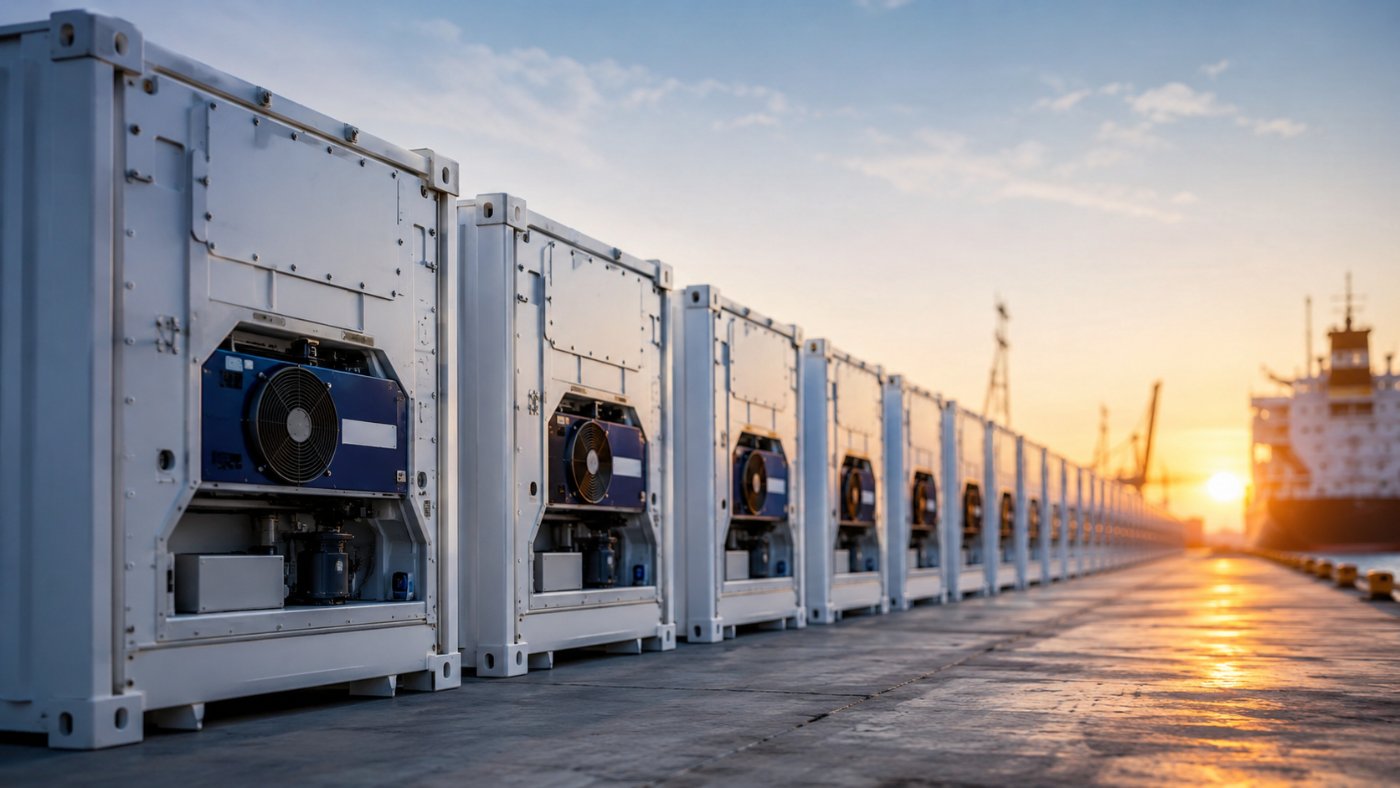
Insurance is the line most mid-size buyers skip on a part-load, on the reasoning that the value is small and the risk is the supplier’s problem. Neither half of that is reliable. On a shared container the value at risk is small only in isolation, and once the goods are on the water, who carries the loss depends entirely on the Incoterm and on whose policy names your cargo.
The Incoterm decides who must insure, not who is covered
Under FOB and CFR nobody is obliged to insure your goods. Risk passes to you when the cargo is loaded at the Egyptian port, and if there is no policy in your name, a loss between there and your warehouse is simply yours. Under CIF the seller must insure, but the default obligation is Institute Cargo Clauses (C), the narrowest of the three. Clauses (C) covers listed events such as fire, stranding, collision and general average. It does not cover most theft, non-delivery, water damage or, critically for produce, temperature failure. Under CIP the default is the widest cover, Clauses (A), which is why CIP is worth asking for when the seller is arranging insurance.
The clause that matters on reefer cargo
Standard cargo policies exclude loss caused by inherent vice, meaning the natural decay of perishable goods. They also exclude refrigeration machinery breakdown unless it is bought back as an extension. For fresh produce this is the whole point of the policy. Ask specifically for reefer machinery breakdown cover, usually written with a deductible period of 24 hours of continuous failure, and check whether it applies while the container is on the quay as well as on board. Without that extension a policy on a reefer part-load covers the sinking and not the spoiling.
What groupage changes
On a shared container your cargo is one consignment among several, and that has practical effects. The bill of lading may be a house document from the consolidator rather than a carrier bill. Insured value has to be stated for your portion alone. And in a general average declaration, every cargo interest in the container contributes in proportion to value, which is one of the few situations where a small consignment can face a bill far larger than its own loss. This is also where the paperwork discipline in our note on documentation for a mixed Egyptian container earns its keep, because a claim is assessed on documents.
Sizing the cover
Cargo is normally insured at CIF value plus 10 percent, the added margin covering your costs and expected profit. Rates on reefer produce from Egypt into Europe or the Gulf are typically a fraction of one percent of insured value, which on a part-load is a small number against the carton cost you would otherwise write off. If you import regularly, an annual open policy through your own broker is cheaper per shipment than buying single-transit cover each time, and it puts the claim in your hands rather than depending on the seller to pursue it.
Before you claim
Note damage on the delivery receipt at the point of collection, photograph the pallets before breaking them down, keep the temperature trace and call the surveyor named in the policy before disposing of anything. The first 24 hours are covered in our guide to checking an Egyptian part-load on arrival, and the commercial route when a single item is short or off-spec sits alongside it.
Ask for a quote
Peivana quotes part-loads on FOB, CFR, CIF and CIP so the insurance position is visible in the price rather than assumed. For availability, pack formats and a same-day quotation on Incoterms 2020 terms, message the desk on WhatsApp at +20 10 9911 1918.