
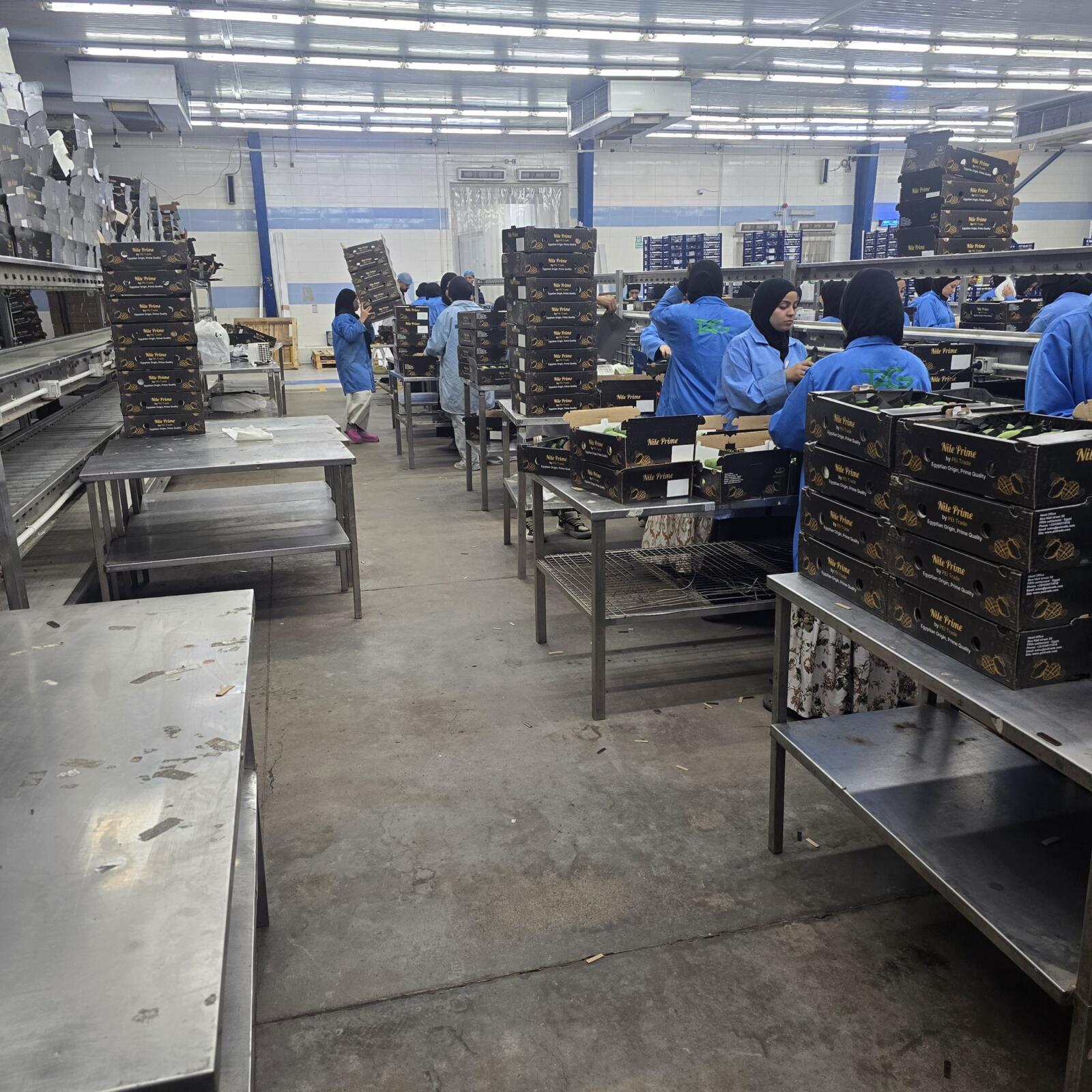
Most mid-size buyers do not sell fruit in the carton it arrived in. A 4 kg export carton of Valencia becomes 2 kg nets for a grocery chain, or loose display for a wholesale customer, or 1 kg punnets for a delivery service. Repacking is normal and it is often where the margin is. It also creates costs and legal duties that do not exist while the fruit is still in the original carton, and those are worth counting before the order is placed.
You become the packer
The moment you open the export carton and put the fruit into your own pack, you are the packer on that pack. The label is yours. Country of origin still has to be declared, the class and size you print must match what is inside, and the traceability chain has to run from your pack code back to the lot code on the Egyptian carton. Keep the original carton labels or photograph them and file them against your batch. If a customer queries a pack six weeks later, that record is the only thing linking it to the shipment.
The yield you actually get
A repack never returns 100 percent. Expect to lose fruit to the grading you do at your own bench, fruit outside the size band your customer specified, and any unit damaged during handling. Loss varies by crop and by how tight the retail specification is, and the sensible approach is to measure it on your first two repacks rather than assume a figure. Build the loss into your cost per pack alongside the labour, the packaging material and the time your cold room is occupied.
Cold chain and the working window
Repacking happens at ambient temperature, and every minute the fruit sits on the bench is shelf life spent. Work in batches small enough that the rest of the pallet stays in the cold room, keep the repack area as cool as you practically can, and return finished packs to temperature immediately. Condensation is the specific risk: cold fruit brought into a warm room sweats, and wet fruit sealed into a film pack decays fast. Let the surface dry before sealing, or move fewer pallets at a time.
Order in a way that makes repacking easier
- Specify a tighter count range than you strictly need. A narrow size band repacks faster and grades out less.
- Ask for the crop packed loose or in single-layer cartons where that suits your pack, rather than in tray packs you then have to dismantle.
- Order Class I where the pack faces a retail customer, and keep the discussion about lower grades separate.
- Ask for the lot code and packing date on a face you can photograph without breaking the pallet down.
- Confirm the fruit is not coated in a way that conflicts with the declaration on your own pack.
If you would rather not repack at all, the alternative is to have the origin do it, which is covered in our note on private label produce programmes from Egypt. And before either route, our guide to writing a product specification for a part-load sets out the quality clauses that make the arriving fruit fit for the pack you plan to build.
Peivana ships mixed part-loads with per-product specifications, so the same container can carry one crop packed for direct sale and another packed loose for repacking. We are GLOBALG.A.P. and BRC certified and quote the same day.
Get a quotation
Tell us the pack you sell into and we will quote the format that repacks best. Message the Peivana team on WhatsApp at +20 10 9911 1918.