Demurrage and detention are the charges that turn a profitable container into a break-even one, and they are almost entirely avoidable. They are also the charges that mid-size buyers get caught by most often, because a first-time importer plans the purchase carefully and then assumes clearance will take as long as it takes. On a reefer the clock runs faster and the daily rate is higher, so a delay that would be a nuisance on a dry box becomes a real number within a few days.
The two charges are not the same
Demurrage is charged by the shipping line for the time your container sits inside the terminal after the agreed free time expires. Detention is charged for the time you keep the container outside the terminal, from the moment it leaves the gate until it is returned empty. A shipment can incur one, the other, or both on the same container, and importers are frequently billed for both without realising they are separate items.
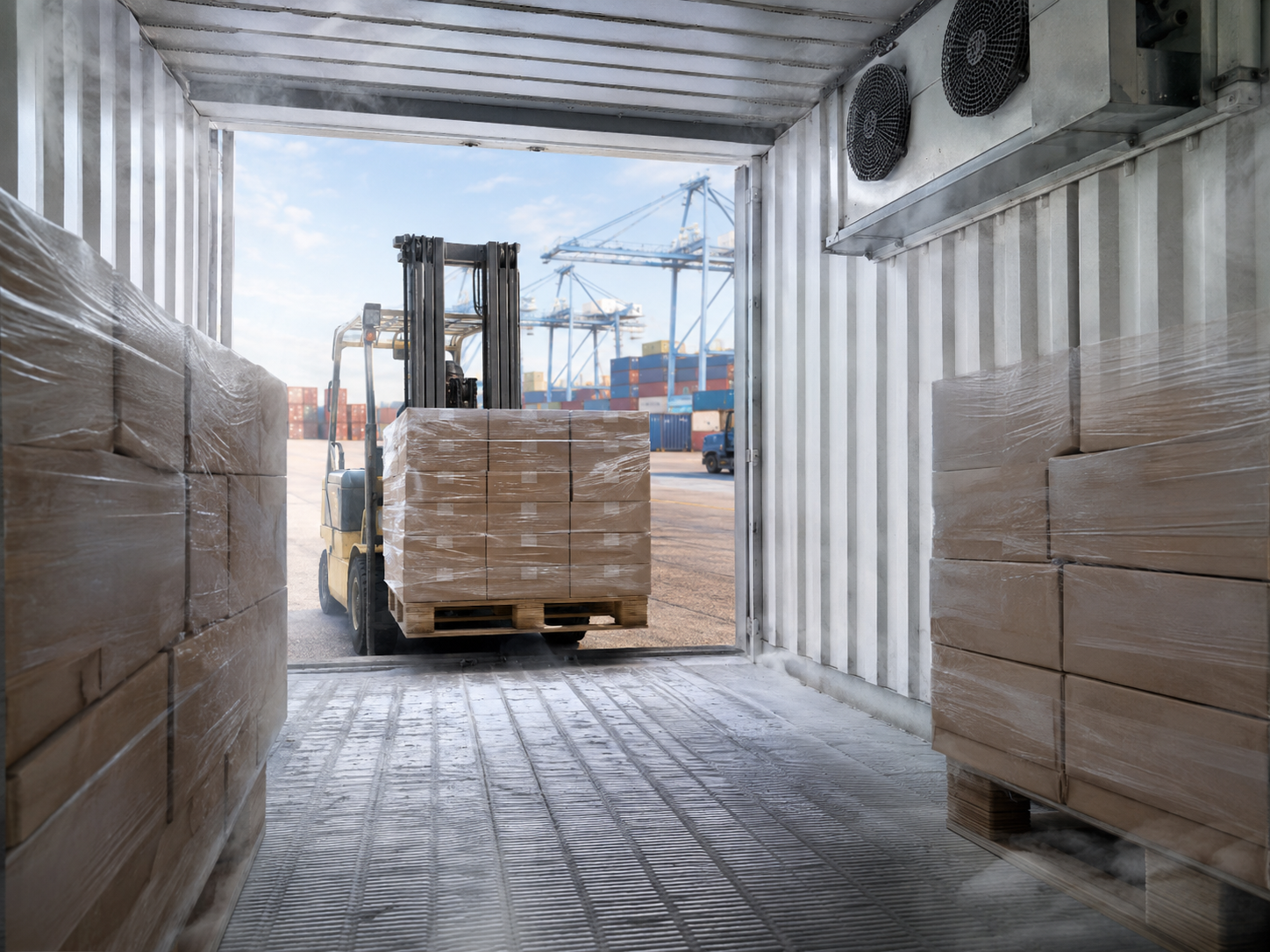
On top of those, a reefer sitting in a terminal draws a plug or monitoring charge for the electricity and the daily temperature check. That charge often starts from day one, not after free time, so a container that clears quickly still carries some plug cost. When a container is delayed, the plug charge accrues alongside the demurrage and the two together are what produces the invoice that surprises people.
Typical free time on Egyptian reefer shipments
Reefer free time is shorter than dry free time on almost every trade. Three to five days of combined demurrage and detention is common as standard, against seven to fourteen on a dry container. Lines will often extend it to seven or ten days if it is negotiated before the booking is confirmed, particularly for a shipper moving regular volume. Rates after free time typically run in the range of 60 to 150 US dollars per day for the first tier and step up in bands after that, with the plug charge on top.
Free time is measured from container discharge, not from the vessel arriving, and not from when your documents are ready. That distinction is where most disputes start.
What actually causes the delay
In practice the causes cluster into four groups. Documents arriving late or with a discrepancy, which is by far the most common. A phytosanitary or health inspection being ordered at destination, which is normal and not a fault but adds days. Payment not being released in time to obtain the delivery order. And no cold storage available at the receiving end, which turns a clearance problem into a storage problem.
None of these is a shipping problem. All four are timing problems, and all four are visible in advance if the file is being tracked. Our note on documentation for a mixed Egyptian container covers the paperwork side, which is where the cheapest savings are.
How to avoid the charges
Ask for the free time to be stated on the booking confirmation in writing, not assumed from the tariff. Request the full document set by email as soon as the vessel sails rather than waiting for couriered originals, and check the bill of lading, invoice, packing list, phytosanitary certificate and certificate of origin against one another before the container arrives. Appoint the customs broker before the vessel departs, not after it berths. Confirm your cold store has space booked for the arrival date and for three days either side of it, because vessel schedules move.
Where the shipment is a part-load or groupage consignment, the free time applies to the whole container rather than to your share, so co-loaders who are slow to clear can generate charges on your goods. The structure of that risk is explained in our guide to LCL and part-container shipping from Egypt. On a Peivana consolidated load the clearance timetable is agreed with every party before booking for exactly that reason.
If charges have already accrued
Ask the line for a detailed breakdown by day and by charge type, and check that the free time was calculated from discharge. Where the delay was caused by an inspection ordered by the authorities, many lines will waive or reduce demurrage on application, but only if the request is made promptly and supported by the inspection notice. Once the container is returned and the invoice is settled, the negotiating position is gone.
For clearance timelines, document checks before sailing, or a same-day quotation on a part-load, message the Peivana team on WhatsApp at +20 10 9911 1918.