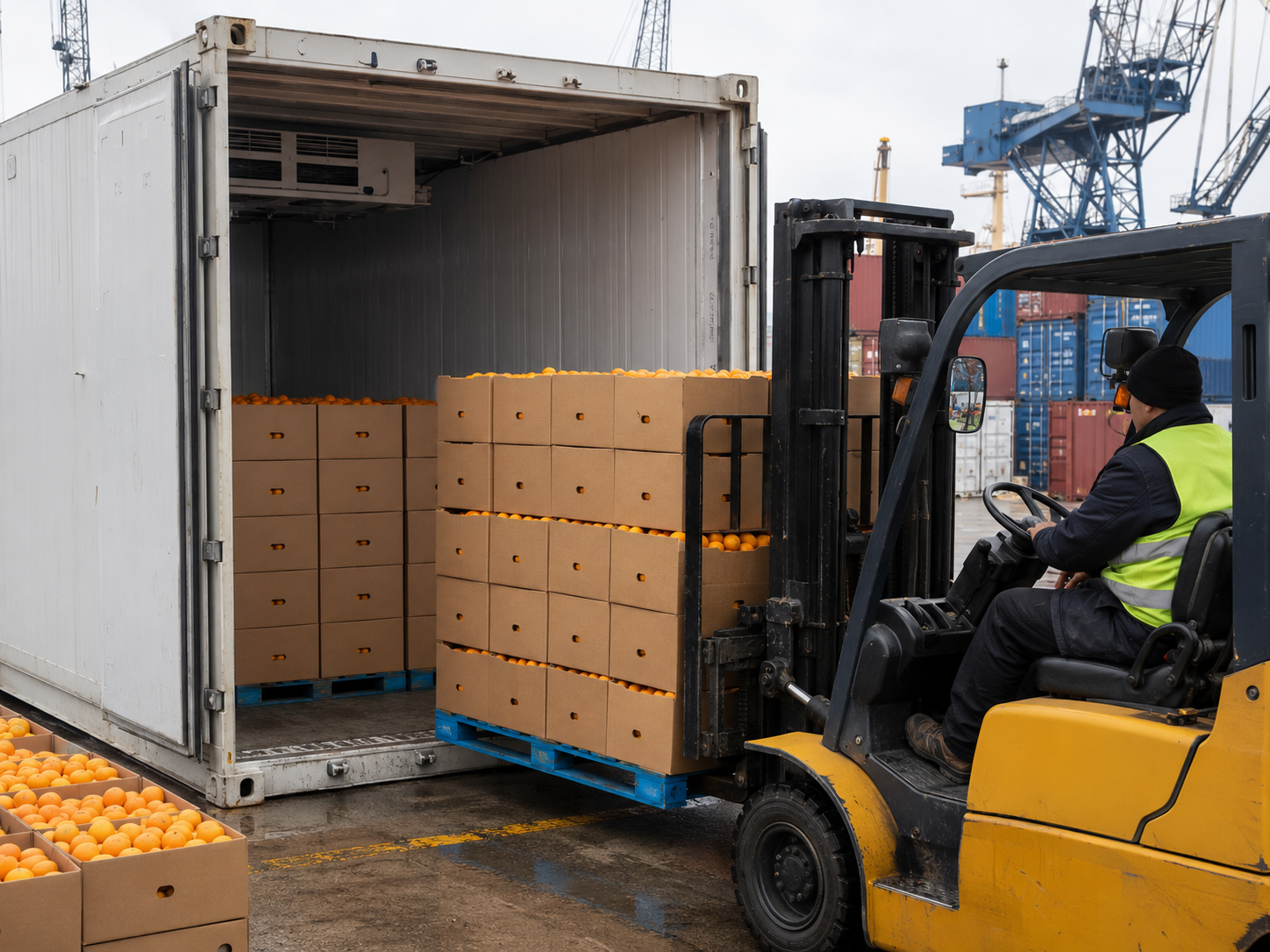
Incoterms 2020 were written with full container loads in mind. Most of the buyers we deal with are not booking full containers, they are booking two pallets of mango or five pallets of IQF okra inside somebody else’s reefer. The terms still apply, but the risk transfer points sit in slightly awkward places, and choosing the wrong one on a part-load costs money in ways that are not obvious from the quotation.
FOB on a part-load is usually the wrong choice
Under FOB the seller delivers when the goods are on board the vessel at the named port, and risk passes to the buyer at that moment. On a full container this is clean. On a part-load it is not, because you do not control the container, you do not control the consolidation schedule, and you cannot nominate the vessel for a box you are sharing with three other shippers. A buyer taking two pallets FOB Alexandria is accepting risk for cargo that a consolidator loads on a date the buyer did not choose. FOB works when you own the box. On groupage it transfers risk without transferring control, which is the worst combination.
CFR and CIF
Under CFR the seller arranges and pays carriage to the named destination port, with risk still passing on loading. CIF adds minimum insurance cover, which under Incoterms 2020 for CIF means Institute Cargo Clauses C. Clause C is limited cover. It responds to major casualty events such as fire, stranding and collision, and it does not respond to a reefer machinery failure that ruins your pallets. For perishable part-loads this is a real gap. Buyers who want the temperature excursion covered need to specify Clause A cover in the contract, or arrange their own policy and buy on CFR instead.
DAP is what most part-load buyers actually want
Under DAP the seller delivers when the goods are placed at the buyer’s disposal at the named place, ready for unloading, with import clearance and duties remaining the buyer’s responsibility. On groupage this maps to how the shipment really moves. One party handles consolidation, the sea leg, deconsolidation at destination and the inland leg. The buyer receives pallets at a warehouse and deals with customs and duty. Price comparison gets easier too, because a DAP number is close to a landed cost. Our note on building the real number per carton shows what still sits outside a DAP quote.
DDP and why it is rarely quoted from Egypt
DDP puts import clearance, duty and any destination taxes on the seller. Few Egyptian exporters quote it, because it requires the seller to be able to act as importer of record in the destination country, and in most markets that means a registered entity and a VAT number. If you are offered DDP from Egypt, confirm exactly who is clearing the goods and under whose registration before you accept it.
Practical rules for part-loads
Name the place precisely. DAP Rotterdam is not enough. DAP followed by the street address of the receiving warehouse is. Confirm who pays for demurrage and detention if the container is delayed at destination, because on a shared box those charges get apportioned and the apportionment is often argued about after the fact. Our guide to free time and charges on Egyptian reefer shipments covers that risk. Finally, ask whether the quoted term applies to the whole consolidated container or to your pallets specifically, and whether a delay caused by another shipper in the same box affects your delivery commitment.
Peivana ships mixed and part-load quantities from Egypt under GLOBALG.A.P and BRC certified sourcing, and quotes FOB, CFR and DAP on the same enquiry so you can compare like for like. For a same-day quotation on a part-load, message us on WhatsApp at +20 10 9911 1918.