
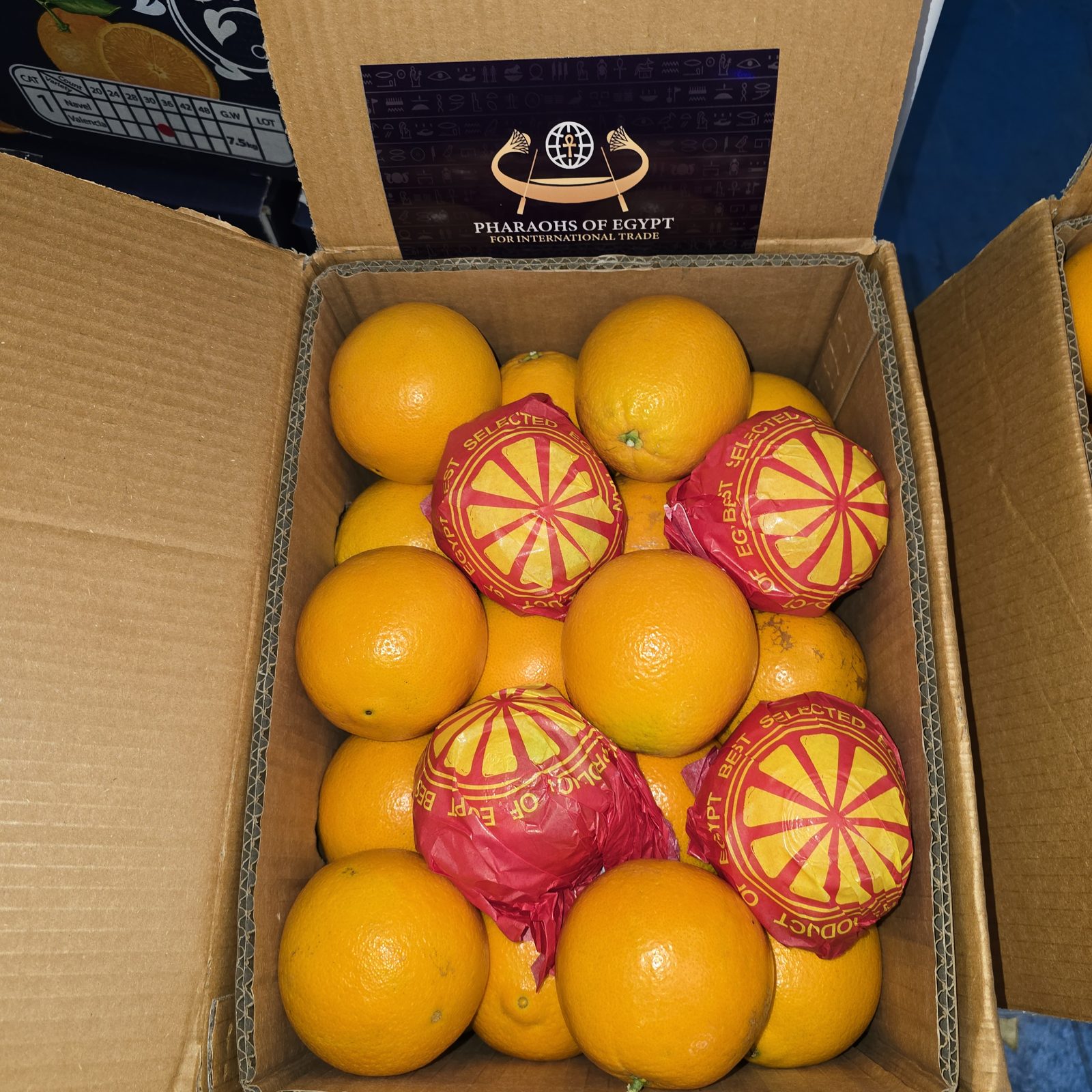
Citrus is the crop most often quoted in full containers and most often needed in smaller quantities. A wholesaler who sells twelve pallets of oranges a month does not want a 20-pallet reefer landing at once, and a retailer testing an Egyptian programme wants two pallets before committing to twenty. The part-load is how that gets solved, and citrus happens to be well suited to it because it shares a set point with several other products loading in the same months.
The window
Navel oranges run from late October or early November through January. Valencia takes over from January and runs to April or May. Mandarins and easy-peelers start earlier on some varieties and finish before the Valencia peak. Grapefruit sits from December to April.
For a mid-size buyer this means the citrus part-load season effectively opens in November and stays open until spring, which is unusually long for a single category. It also means the first available quantity in a new season is the tightest, because early Navel volume is thin and programme buyers have it committed.
Minimum quantities
Citrus prices and moves per pallet. A practical minimum on a groupage load is one standard pallet, and half pallets are workable when the rest of the container is being built from other products. A single Euro pallet of 15 kg cartons carries in the region of 60 to 72 cartons depending on carton height and pallet configuration, which is roughly 900 to 1,080 kg net.
Below half a pallet the per-kilo freight cost stops making sense against airfreight or against simply buying from a local importer. Our note on minimum order quantities from Egypt sets out the same arithmetic across products.
Formats
Three formats cover most part-load requirements. The 15 kg telescopic carton, loose packed, is the wholesale standard and the cheapest per kilo. The 15 kg tray-packed carton holds fruit in moulded trays and arrives with less rub marking, which suits a retail or premium wholesale customer. Mesh bags of 2 kg or 3 kg inside a master carton serve retail programmes that sell by the bag rather than loose.
Counts to specify: 48 to 125 covers the commercial range on oranges, with 56 to 88 the easiest to source in volume. Mandarins size differently and are usually specified by diameter band rather than by count. Do not leave count open in the order. It is the single most common cause of an arrival argument on citrus.
Sharing a reefer
Citrus transits at 4 to 5 degrees Celsius with fresh air exchange open. That set point is compatible with pomegranate, and workable alongside several vegetables, which makes citrus a convenient anchor product when a container is being built from several buyers or several products. It is not compatible with mango, banana or anything that needs to stay above 10 degrees, and it should not share a box with a strong ethylene producer.
Citrus is itself sensitive to ethylene in the sense that exposure accelerates degreening and can cause off-flavour, so avoid loading it with apples, melons or ripening stone fruit. See mixing products in one Egyptian reefer for the full compatibility rules.
What arrives
Transit to Mediterranean ports runs roughly five to eight days, to northern Europe ten to fourteen, to the GCC via Sokhna around seven to twelve. Citrus holds well, so a properly pre-cooled orange arriving after twelve days still has three to five weeks of usable life at chill. That is longer than almost anything else a mid-size buyer loads from Egypt and is a large part of why citrus part-loads work commercially. Our reference on shelf life left on arrival puts the numbers alongside other products.
The failure mode to watch is fruit that was not cooled before loading. Decay on arrival almost always traces back to the first 48 hours after picking, not to the voyage.
Documents
Phytosanitary certificate, certificate of origin, invoice, packing list and bill of lading. EU-bound consignments need CHED-PP pre-notification, and groupage adds the complication that several consignees may share one container, so pre-notification needs coordinating. EUR.1 or a statement on origin can reduce duty on EU entry under the Egypt agreement, which is worth confirming before the load rather than after clearance.
Booking
Early Navel in November is the tight point. If you want fruit in the first weeks of the season, indicate volume now. For January onward, four to six weeks ahead is generally enough. Peivana is GLOBALG.A.P. and BRC certified and quotes part-loads the same day.
To request counts, formats and a quotation for an Egyptian citrus part-load, message the Peivana desk on WhatsApp at +20 10 9911 1918.