Onion and garlic are the two Egyptian lines a mid-size distributor can build a business on without needing cold chain investment or a fast-moving fresh programme. They store, they travel in ventilated containers, and they sit comfortably alongside other dry cargo in the same load. What they do require is precision on calibre and packing, because those two variables decide whether a buyer wins their tender or loses it on a fraction of a cent per kilogramme.
Onion grades and calibres
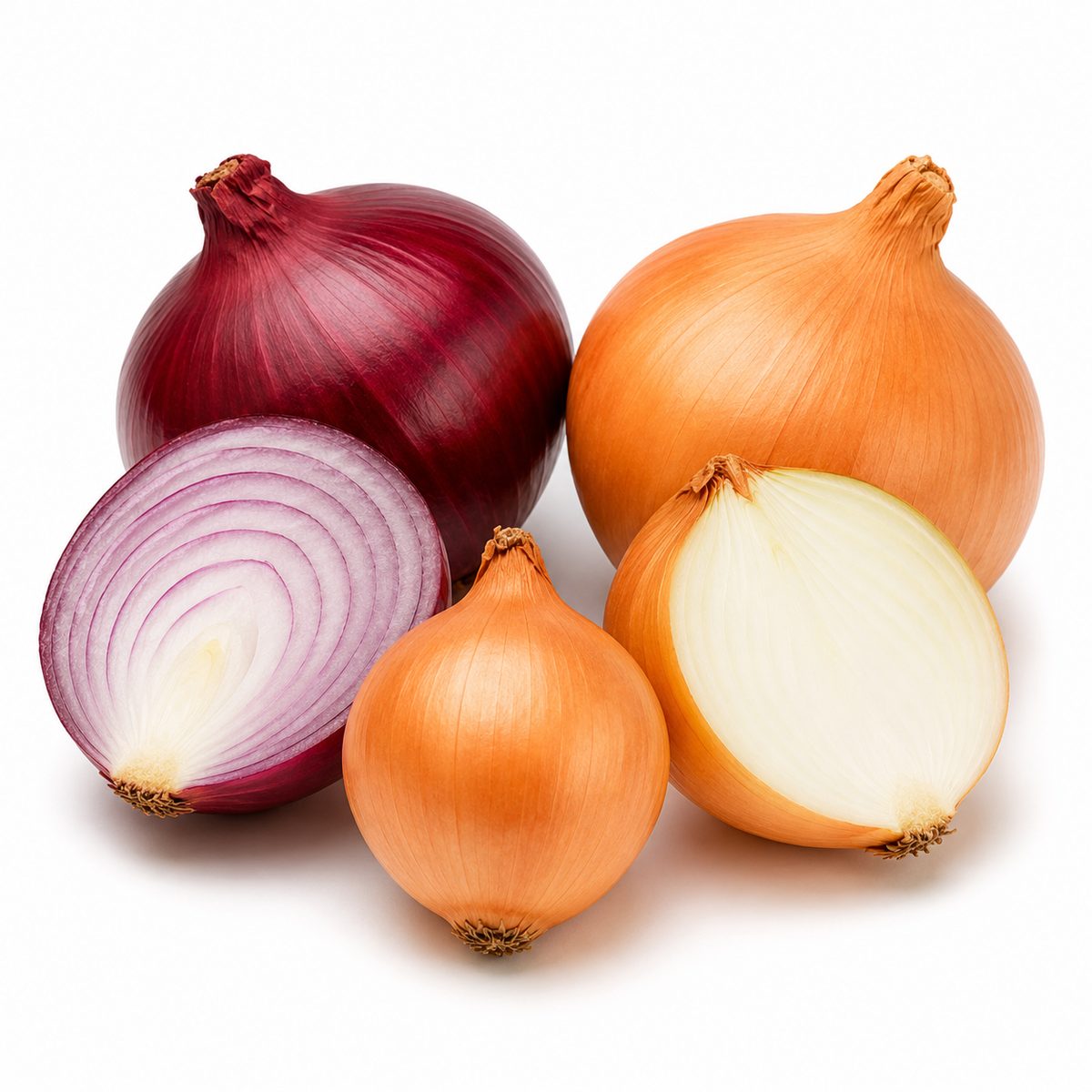
Egyptian golden onion and red onion are both export lines, with golden accounting for the larger share of shipments to the Gulf, Europe and South Asia. The main harvest runs from March into May, and controlled storage carries supply through the summer and into the autumn, which is where the market sits now.
Standard export calibres are 40 to 60 mm, 50 to 70 mm, 60 to 80 mm and 70 to 90 mm. Different destinations pull different bands. Gulf retail leans towards 60 to 80 mm, South Asian wholesale takes the wider bands, and processors often take the smaller calibres at a discount. Specify the band in the order rather than asking for medium or large, since those words mean different things in different markets.
Packing runs to 5, 10, 20 and 25 kilogramme mesh bags, jute bags where the destination requires them, and 1000 or 1250 kilogramme jumbo bags for bulk buyers. A 40ft container carries roughly 26 to 28 tonnes of onion in mesh bags. Onions ship in ventilated containers rather than reefers in most seasons, which keeps freight cost meaningfully lower than a chilled fruit load.
Garlic specification
Egyptian white garlic is graded by bulb diameter, with common bands at 4.5 to 5.5 cm, 5.5 to 6.5 cm and 6.5 cm and above. Red or purple garlic is also available in smaller volume. Packing is typically 10 kilogramme mesh bags or 5 and 10 kilogramme cartons, with braided and pre-peeled formats available for specific buyers. Garlic is harvested alongside onion in the spring and held in controlled storage, so availability runs through most of the year with quality and price moving as stocks draw down.
Combining the two, or adding a third line
Because both products travel dry and at ambient or lightly cooled conditions, a buyer with modest volume can take onion and garlic in one container instead of committing to a full load of either. Adding potatoes, sweet potatoes or dried legumes to the same load is straightforward, since the handling requirements do not conflict. The practical limit is weight rather than space. Onion and potato are dense, so a container reaches its payload ceiling long before it fills, and the load plan needs to be built to the weight limit of the destination road network. Buyers serving markets where these lines move in volume may find our notes on Bangladesh and West Africa useful for context on what typically travels together.
Quality and documents
Onion should arrive firm, with dry skins, closed necks and no sprouting or soft shoulders. Garlic should be firm with intact wrappers and no green shoot showing. We work to GLOBALG.A.P and BRC certified sources, issue the phytosanitary certificate and certificate of origin with every shipment, and arrange third-party pre-shipment inspection where a buyer or a tender requires it.
Send us your calibre, bag format, quantity and destination port and we will come back with a quotation the same working day. Message the Peivana desk on WhatsApp at +20 10 9911 1918.