UK buyers approach Egyptian origin from a different position than most of our European customers. Volumes at the mid-size end are smaller, the wholesale markets move fast, and a lot of the demand is for one or two pallets of several products rather than a full container of one. That is exactly what a part-load is for. The complication is on the import formalities side, which since the UK left the EU system runs to its own rules and its own timings.
How the load is actually built
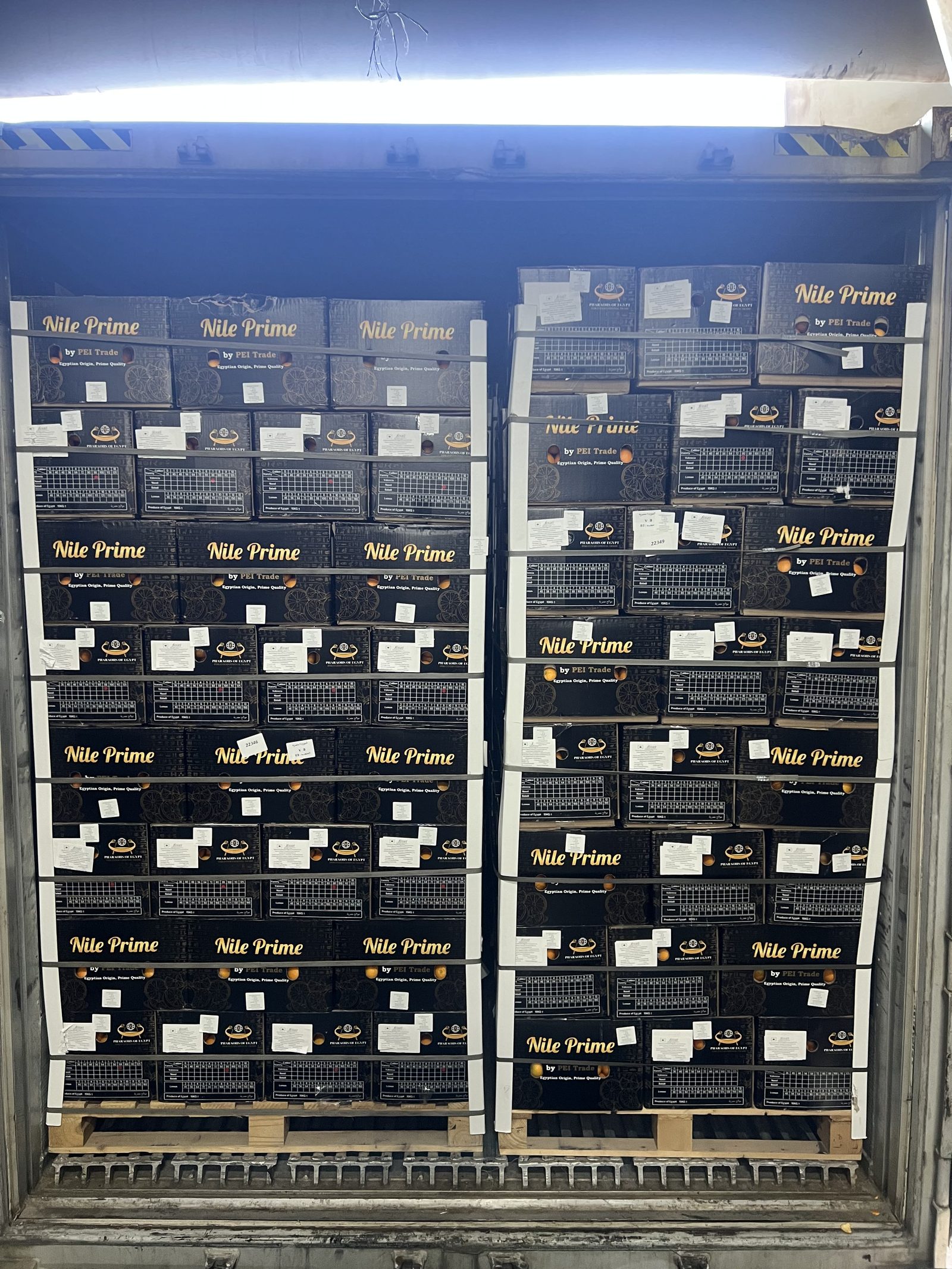
Two structures cover almost all UK part-load business from Egypt. The first is consolidation at origin, where your pallets are combined with other buyers’ pallets in a single reefer sailing direct or via transhipment, and the container is devanned at a UK depot with your pallets released to you. The second is a shipment to a European hub, typically Rotterdam or Antwerp, with onward road groupage into the UK. The first is cleaner on documentation and usually faster. The second sometimes has better sailing frequency and is worth pricing on a lane where direct space is thin.
The mechanics of how the box is assembled at origin are set out in our note on consolidating several Egyptian suppliers into one reefer. The important commercial point for a UK buyer is that you pay for the pallet positions you occupy, not for the container, so your cost per carton moves with how well your pallets are built.
Ports and inland options
Felixstowe, Southampton, London Gateway and Tilbury handle the bulk of containerised produce, with Liverpool and Teesport relevant for northern buyers. Choose on where your customers are rather than on headline freight cost, because two hundred miles of UK trunking on a chilled load can outweigh the saving on the sea leg. For part-loads, also check where the consolidator’s devanning depot sits, since that is where your pallets physically become available and it is not always at the port of discharge.
Pre-notification and checks
Fresh produce entering Great Britain from Egypt is subject to sanitary and phytosanitary controls and has to be pre-notified before arrival on the UK’s import notification system. The importer or their agent is responsible for that notification, and it has to be consistent with the phytosanitary certificate issued in Egypt. Different commodities sit in different risk categories, which determines the frequency of documentary, identity and physical checks, and those categories are reviewed periodically. Confirm the current category for each product line you intend to buy rather than carrying over what applied last season.
The practical planning consequence for a part-load is that a check can hold the whole container, including pallets belonging to other buyers, and none of you control the queue. Build a contingency day or two into the delivery promise you give your own customers.
Duty and origin
Preferential duty treatment depends on the correct proof of origin accompanying the shipment and on the product’s tariff classification. A missing or incorrectly completed origin document is paid for in cash at import and is difficult to recover afterwards. We cover what the documents have to show in duty and preferential origin on an Egyptian part-load. Ask for a draft document set before loading, not after sailing.
What a first UK order realistically takes
Count backwards from the week you need the stock. Sea transit from Alexandria or Damietta to a UK east coast port typically runs around twelve to eighteen days depending on service and transhipment, with additional days for devanning, clearance and inland delivery. Add the origin consolidation window, which is the period in which the container is being filled and is not under your control. For a first order with new paperwork, three to four weeks from confirmed order to your warehouse is a realistic plan, and anything faster should be treated as a bonus rather than a promise.
Sensible first lines
For an autumn start, pomegranate, onion, sweet potato, fresh herbs and frozen lines all travel well in small quantities and give a UK buyer a long enough selling window to learn the lane. Citrus opens from late autumn and is the natural second step.
For a same-day quotation on a UK part-load, with the pallet positions, routing and document set priced together, message the Peivana desk on WhatsApp at +20 10 9911 1918.