A mixed container from a single exporter is straightforward. One packhouse, one loading, one set of documents. It gets more complicated when the products you want are not all packed by the same company, which is common once a buyer’s list crosses categories, for example fresh citrus alongside IQF strawberry alongside dates. At that point the container has to be consolidated, and consolidation introduces steps that a single-source load never has.
Where the consolidation happens
There are two workable models. In the first, one packhouse acts as the consolidation point. Other suppliers deliver finished, palletised, labelled goods to that site, the pallets are checked in, and the whole container is stuffed there and trucked to the port sealed. In the second, consolidation happens at a bonded cold store near Alexandria or Damietta, and every supplier delivers to that facility.
The packhouse model is cheaper and gives you one accountable party. The cold store model is better when the products need different holding temperatures before loading, or when no single supplier has the chamber capacity to hold other companies’ goods without disrupting their own programme. Ask which model is being used before you confirm the order, because it determines who is responsible if a pallet arrives at the consolidation point out of specification.
Inbound quality control is the step that gets skipped
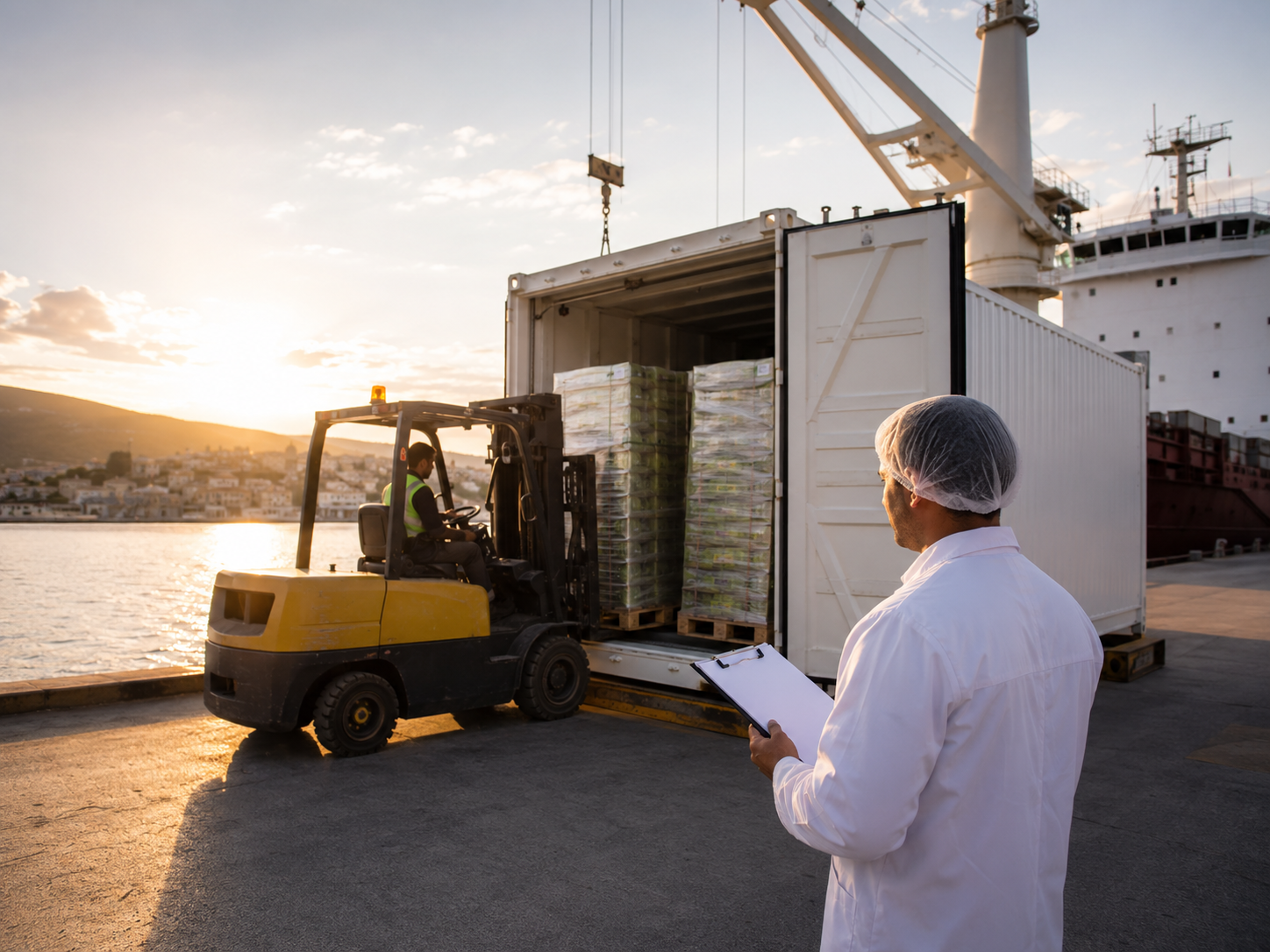
On a single-source load, the packhouse inspects its own fruit as it packs. On a consolidated load, goods arrive already sealed in cartons from a third party, and unless somebody opens and checks them, the first inspection happens at your warehouse. That is too late.
Insist that the consolidator carries out an inbound check on every incoming pallet and records it. At minimum that means pulp temperature on arrival, carton count against the delivery note, label and lot code verification, and a sample carton opened per pallet for grade, size and defects. Ask for that record as a condition of shipment. It costs nothing and it is the only point at which a substandard supplier can be caught before their goods are sealed into your container.
Temperature compatibility narrows fast
With one supplier, the product list is usually built around what can share a set point. With several suppliers each proposing their own items, incompatible products creep in, because no one party sees the whole list. Somebody has to own the compatibility check across the full manifest, including ethylene production and sensitivity, not just temperature. The rules are set out in our note on temperature and ethylene compatibility in mixed reefers. Run that check before you place orders, not after deposits are paid.
Documents and the timeline
Each supplier issues its own commercial invoice, and each product may need its own phytosanitary or health certificate. Those have to be collated into one document set matching one bill of lading, with a consolidated packing list that shows which pallets came from which supplier. Certificates are issued against inspection at the point of origin, so a supplier who delivers late to the consolidation point delays the certificate, and the certificate delays the loading.
Which is why consolidated loads need more lead time than single-source ones, typically several extra working days. The slowest supplier sets the loading date. Build the schedule backwards from the sailing and give every supplier a delivery deadline at the consolidation point that sits comfortably ahead of the gate-in date, as laid out in our mixed container timeline. Agree in writing what happens if one supplier misses it: the container sails short, or the container waits.
Peivana consolidates multi-product loads from GLOBALG.A.P and BRC certified sources, with inbound pallet checks recorded and one document set issued per buyer. For a same-day quote on a consolidated container, message us on WhatsApp at +20 10 9911 1918.