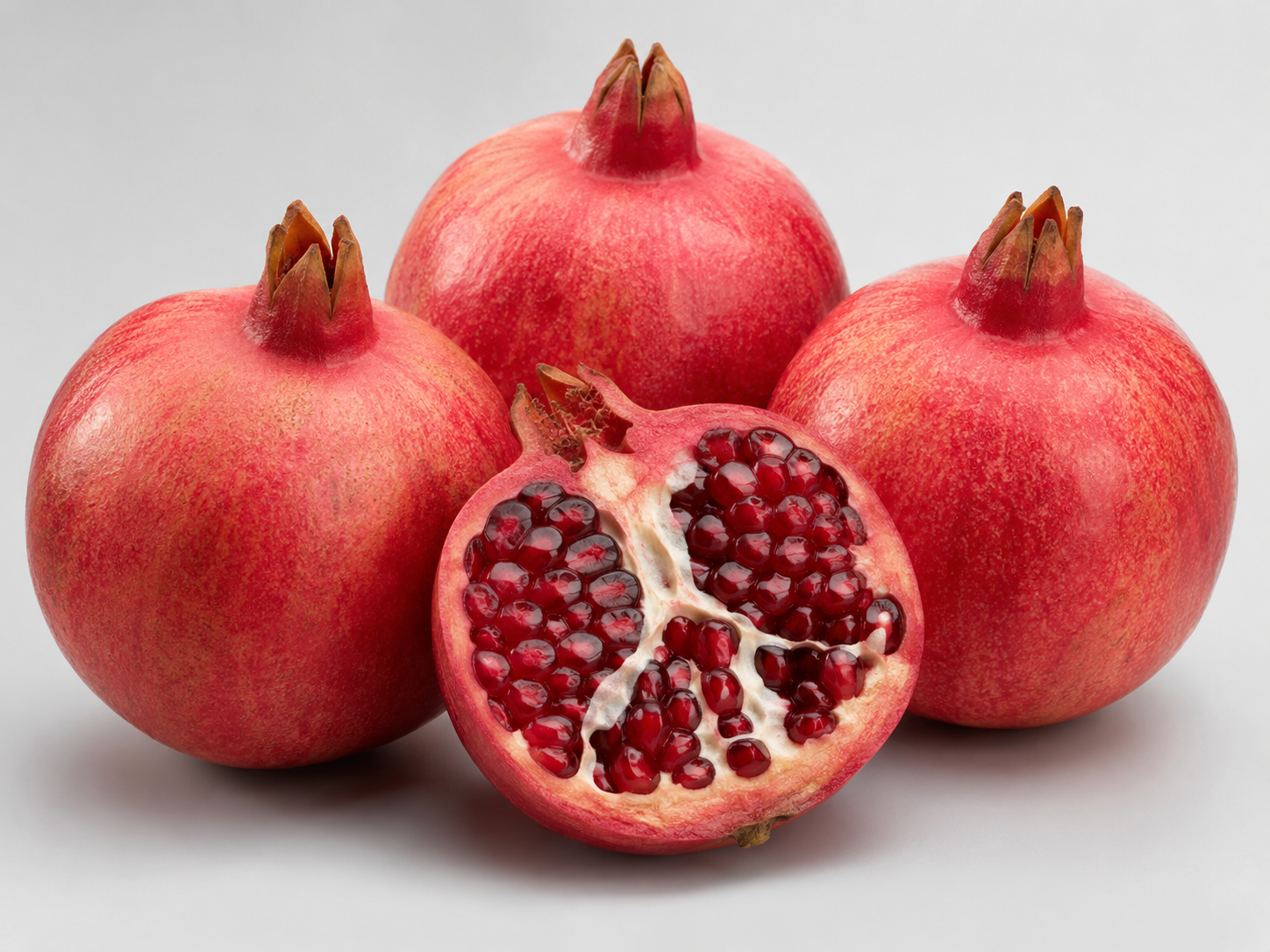
Egyptian pomegranate harvest opens in September. Bookings for the first sailings are being taken now, and for buyers who do not move full containers of a single fruit this is the right moment to plan, because the varieties arrive in sequence and the packing decisions are easier to make before the season than during it.
Two varieties, two windows
116, also traded as Early Wonderful, comes first. Picking usually runs from the second week of September into early October. The skin is bright red, the arils are deep coloured, and the fruit is slightly softer than the main crop, which makes it suited to shorter lanes and to buyers who want to be on shelf ahead of the Spanish and Turkish peak.
Wonderful follows from early October into November and is the variety most importers mean when they say Egyptian pomegranate. Thicker skin, deeper aril colour, higher acidity, and considerably better keeping quality, which is what makes it viable for longer sea transit and for programmes that need to run into December out of cold store.
Sizes and packing
Grading is by diameter and count. The main export bands run roughly from 250 to 350 grams, 350 to 500 grams, and 500 grams and above, which translate to counts of about 18 to 20, 12 to 15, and 8 to 10 per carton depending on the format. Standard packing is a 4 or 4.5 kilogram single layer carton with individual foam net sleeves, or a 10 kilogram telescopic carton for wholesale and processing customers where presentation matters less.
Pomegranate travels at 5 to 7 degrees Celsius with 90 to 95 percent relative humidity. It is not compatible in the same temperature regime as mango or banana, which is the main constraint on what it can share a container with.
Taking pomegranate without a full container
A 40 foot high cube reefer holds 20 pallets, and for a mid-size distributor that is often more pomegranate than a first season justifies. Two routes work. The first is a half pallet or partial allocation on a consolidated sailing, which lets you test the fruit and your customers before committing volume. The second is a mixed container built around compatible temperature, which in the October and November window usually means pomegranate alongside citrus rather than alongside summer fruit. Our note on Egyptian citrus pre-season planning covers how the Valencia and Navel windows line up with this one.
For the earlier part of the season, before citrus opens, pomegranate can also ride with late fruit. That combination is described in our guide to building a late-summer Egyptian fruit container, and the temperature limits set out there apply equally here.
What to fix before September
Three decisions are worth taking now. Agree the variety split between 116 and Wonderful, because the two are not interchangeable on arrival. Confirm the carton format and whether you want printed or generic boxes, since printed stock needs lead time. And name the size band you want rather than accepting a mixed grade, because pomegranate sold on count is much easier to price to your own customers than pomegranate sold as assorted.
Peivana supplies pomegranate from GLOBALG.A.P certified farms with BRC certified packing, and quotes on partial pallets, mixed containers and full loads out of Alexandria, Damietta and Sokhna. To reserve 2026/2027 allocation or request a written offer to your port, message us on WhatsApp at +20 10 9911 1918.