
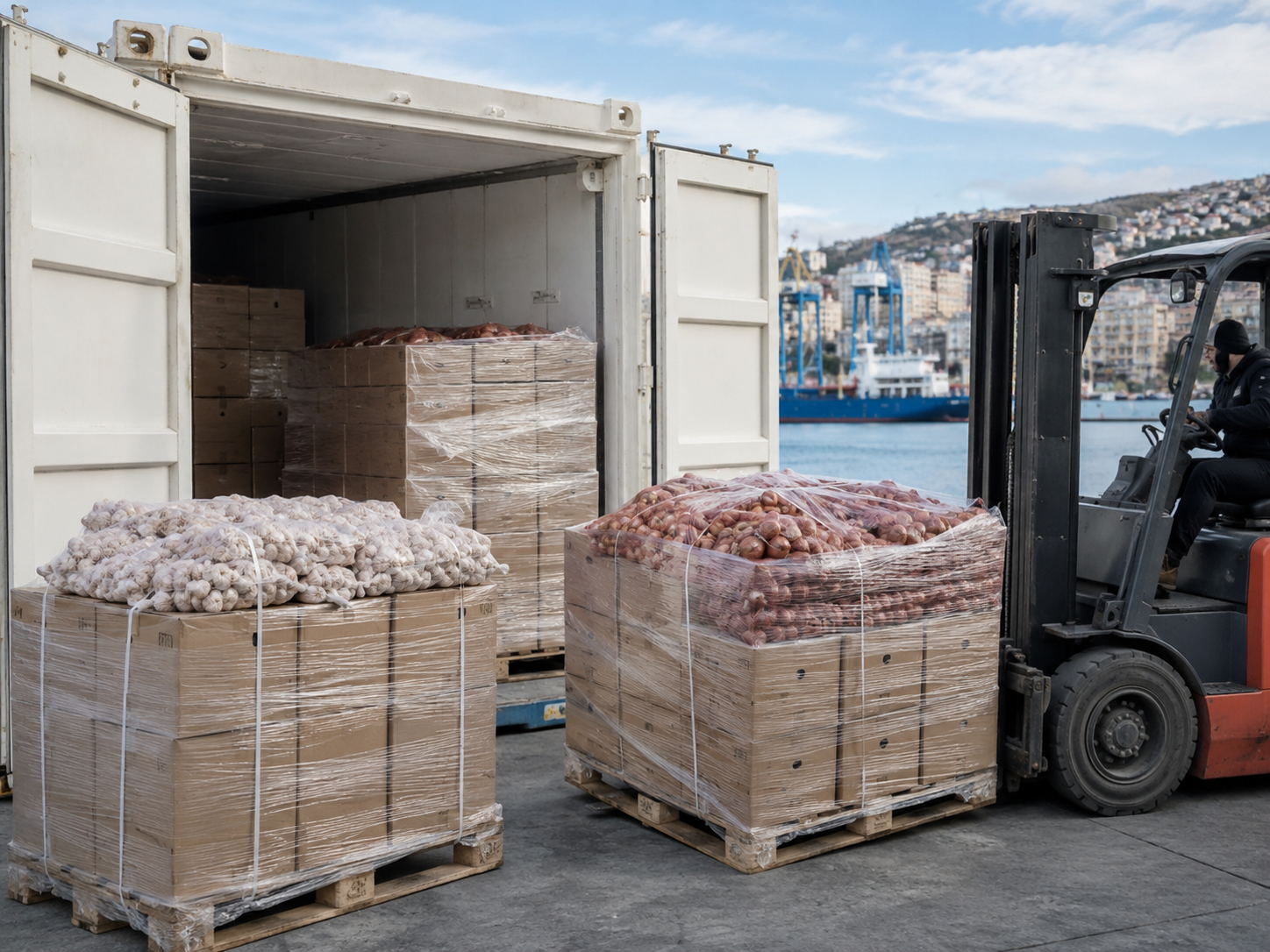
Root vegetables are the quiet workhorse of Egyptian export. They do not carry the margin of a premium fruit programme, but they store well, they travel well, and they forgive the small timing errors that ruin a soft fruit load. For a mid-size distributor building a container that has to justify itself on freight, roots are usually the products that make the maths work.
Why these three combine well
Sweet potato, carrot and beetroot are not identical in their ideal storage, but they overlap enough to share a reefer without one of them suffering. Carrot and beetroot are comfortable at 1 to 2 degrees Celsius with high humidity. Sweet potato is the exception, since it must not go below about 12 degrees or it develops chilling injury and hard core. That single constraint decides the load. If sweet potato is in the container, the set point goes to 12 to 13 degrees Celsius and the carrot and beetroot are loaded as a short transit component rather than a long storage one, which works well on Gulf and Mediterranean legs. For a full winter carrot and beetroot programme into northern Europe, run those two together at 1 degree and keep sweet potato on its own booking. The reasoning behind these choices is set out in our note on reefer set point conflicts in mixed containers.
Sweet potato
Beauregard is the main export variety from Egypt, with orange flesh and a copper skin, and there is smaller volume of white and purple flesh types. Export sizing normally runs 100 to 200 g, 200 to 400 g and 400 to 600 g, with the middle band the most commercially useful. Fruit is cured for four to seven days at 29 to 32 degrees Celsius and high humidity before packing, which heals harvest wounds and sets the skin. Ask for confirmation that curing was done, because uncured sweet potato loses weight and rots in transit. Packing is 5 kg or 10 kg cartons, or 15 kg mesh bags for wholesale markets. The season runs from September through to March.
Carrot and beetroot
Egyptian carrot for export is graded on diameter and length, usually 20 to 45 mm diameter and 15 to 22 cm length, topped and washed, packed in 10 kg cartons or 20 kg mesh bags. The main export window is December through May. Beetroot is graded 40 to 70 mm and 70 to 100 mm, topped and washed, in 10 kg cartons or 20 kg bags, available from December to April. Both crops accept polybag packing in retail units of 500 g or 1 kg where the buyer wants shelf ready product.
Loading a part container
Roots are dense, so a root heavy container reaches its weight limit well before it fills. A 40 ft high cube reefer will typically max out at about 24 to 25 tonnes payload, which on 10 kg cartons is roughly 20 pallets stacked to weight rather than to height. That leaves headroom that can be filled with a lighter product such as onions in mesh bags or cartons of citrus later in the season. Getting this balance right is the whole point of part containers, and our guide to pallet maths for mixed containers works through the arithmetic. Buyers taking less than a pallet of any one item should look at LCL and part-container shipping from Egypt instead.
Certification and terms
All root crops are supplied from GLOBALG.A.P certified farms with BRC certified packing, and residue testing against destination MRLs is arranged before shipment. Loading is out of Alexandria and Damietta on FOB, CFR or CIF terms under Incoterms 2020.
Peivana quotes root vegetable programmes from half pallet upwards and returns same-day pricing on most requests. Send the products, sizes and destination port to the team on WhatsApp at +20 10 9911 1918 and we will build the load plan with you.