
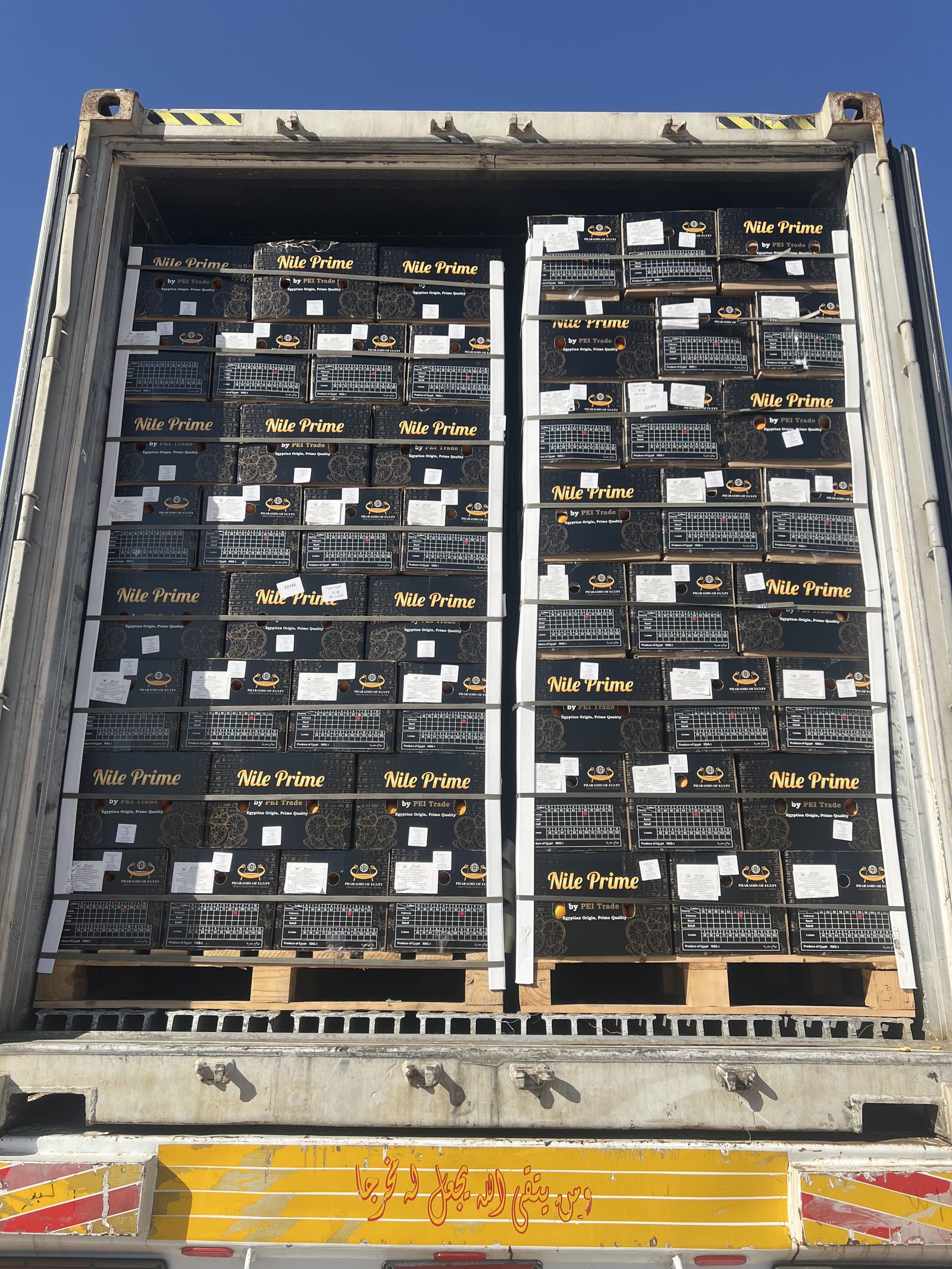
Volume is the easy part of a mixed container. Work out the pallet footprint, check the weight, and the load either fits or it does not. Temperature is where mixed loads actually fail, because a 40ft reefer has one thermostat and one air delivery temperature. Every product in that box gets the same treatment whether it suits them or not. Before you finalise a mixed list, the set point question needs answering.
The four practical temperature groups
Egyptian export produce sorts into a small number of compatible bands. Products inside a band can share a container. Products across bands generally cannot, no matter how neatly they palletise together.
| Group | Set point | Products |
|---|---|---|
| Frozen | Minus 18 C | All IQF lines, strawberry, okra, molokhia, artichoke, mango dice |
| Cold chill | 0 to 2 C | Grapes, pomegranate, table olives in brine, some stone fruit |
| Mid chill | 4 to 7 C | Oranges, mandarins, lemons, green beans, broccoli, artichoke fresh |
| Warm chill | 8 to 13 C | Mango, guava, cucumber, beans in some specs, sweet potato at 13 C |
Dry goods, meaning onions, garlic, potatoes, legumes and dried herbs, are a separate case. They travel in ventilated dry containers, not reefers, and mixing them into a chilled load wastes reefer cost and risks condensation damage.
Chilling injury is the hard limit
The reason mango cannot ride at citrus temperature is physiological, not commercial. Mango held below roughly 8 C develops chilling injury that appears as grey lenticel discolouration, uneven ripening and internal breakdown. The fruit often looks acceptable at the port and fails three days later on the wholesaler’s floor, which makes the claim conversation difficult for everyone. Guava behaves the same way below 7 C. Sweet potato is more sensitive still and should not go below 12 C. These are not preferences you can split the difference on. Running a mango and orange load at 6 C to compromise means the mango arrives damaged and the orange arrives fine.
Ethylene and odour
Even within a compatible temperature band, two further conflicts matter. Ripening mango, guava and melon release ethylene, which accelerates senescence in leafy vegetables, cucumber and broccoli. Keep climacteric fruit away from vegetables that yellow. Separately, onion, garlic and strong herbs transfer odour into any product with a high surface area or fat content, which is why they do not belong in the same air stream as fresh fruit even when the temperature happens to match.
Combinations that work well from Egypt
Late summer, mango with guava at 9 to 10 C is a clean pairing and both are on the same booking calendar. Autumn and winter, oranges with mandarins and lemons at 4 to 5 C is the standard citrus load, and grapes with pomegranate at 0 to 1 C is the second reliable pair. Any combination of IQF lines shares minus 18 C without difficulty, which is what makes a mixed IQF container from Egypt the simplest mixed load to build. Once you have chosen a compatible group, the volume side is covered in our note on pallet maths for mixed containers.
When you genuinely need two temperatures
If your order list crosses bands and you cannot split it, there are three options. Ship two containers on the same vessel and consolidate at destination. Use a dual-temperature reefer with a bulkhead, which is available but adds cost and reduces usable volume. Or sequence the products across consecutive weeks so each travels at its own set point. In most cases the third option costs the least and damages nothing.
Send us your product list and destination and we will tell you before you commit whether it can travel as one load, and if not, how to split it. Message our team on WhatsApp at +20 10 9911 1918 for a same-day answer with set points and pallet counts stated.