Germany and the Benelux are the densest fresh produce market in Europe and the hardest place for a mid-size buyer to get a foot in the door, because almost everything arrives through importers running full containers on standing programmes. A part-load is how a smaller wholesaler, a regional distributor or an ethnic food specialist buys Egyptian produce without committing to a full reefer of one product.
Ports and routing
Rotterdam and Antwerp are the two base ports that matter. Both have deep reefer plug capacity, both are served directly from Alexandria and Damietta on North European strings, and both have the cold store and inspection infrastructure to handle fresh produce at volume. Hamburg and Bremerhaven work well for buyers in northern and eastern Germany, and are usually reached on the same string a few days after the Rotterdam or Antwerp call.
Count 12 to 16 days port to port from Alexandria to Rotterdam or Antwerp, and add two to four days for Hamburg depending on the rotation. Onward trucking from Rotterdam reaches the Ruhr in a day, Frankfurt and Cologne comfortably within a day, and Munich or Berlin inside two. Antwerp serves Belgium and northern France in hours. That onward leg is the part mid-size buyers most often underestimate when comparing a delivered price against a CFR one.
What a part-load looks like on this lane
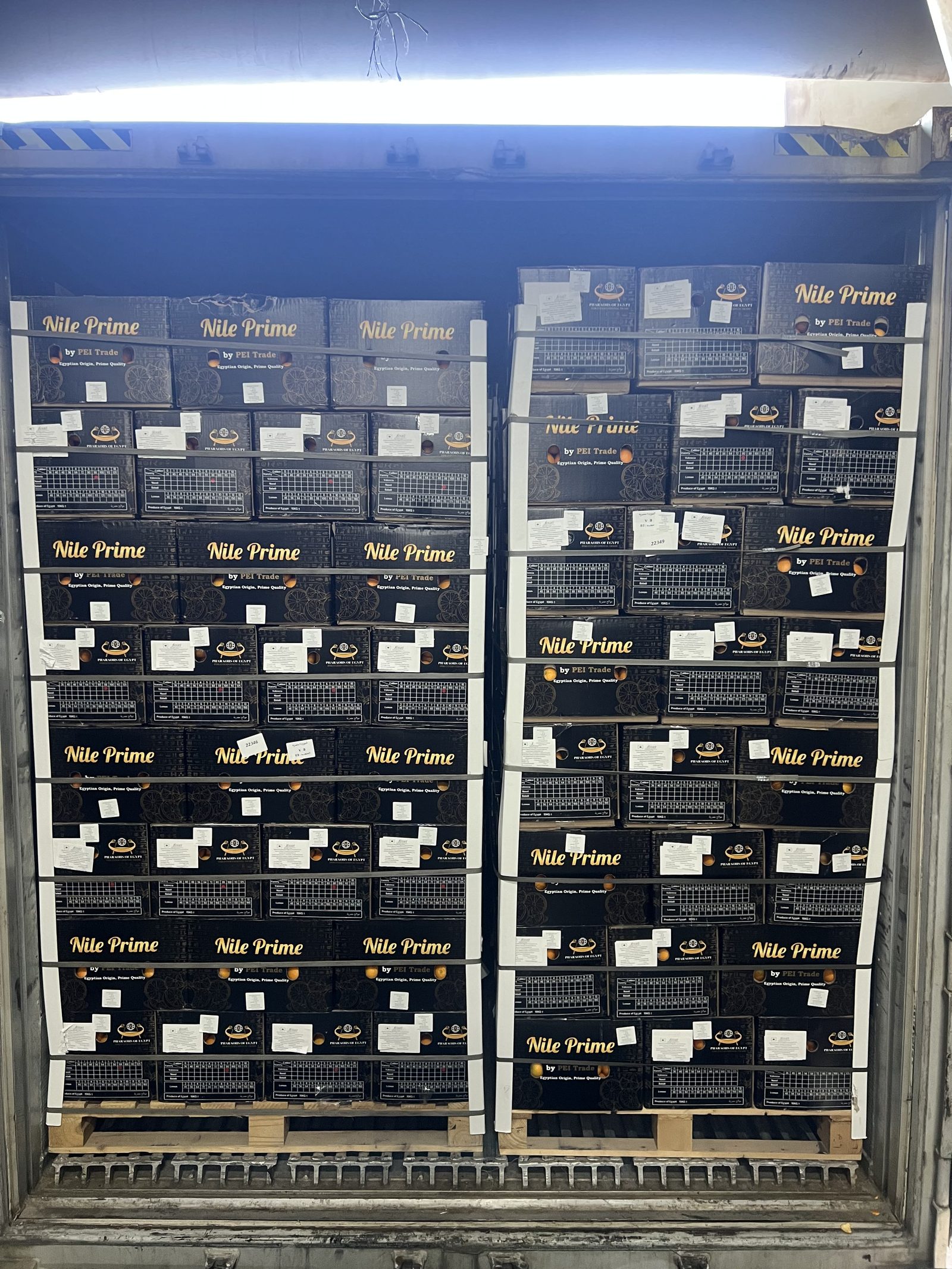
The unit is the half pallet or the full pallet, consolidated with other buyers into one reefer. On the Germany and Benelux lane the products that move most are citrus through the winter, green beans and fine vegetables, fresh herbs, sweet potato, onion, and IQF lines going to food service and manufacturing. A typical first order is two to six pallet positions, which is enough to test a product in your own customer base without carrying a container of it.
Because the reefer is shared, one set point governs the whole box. That constrains what can travel together. Citrus and pomegranate sit comfortably at similar temperatures, while herbs and beans want warmer settings and will not tolerate a citrus set point for two weeks. Our note on temperature and ethylene compatibility in a mixed reefer sets out which combinations work.
EU entry formalities
Fresh produce entering the EU requires pre-notification through the EU system before arrival, with a phytosanitary certificate covering the consignment. The entry point handles documentary checks and, for products subject to them, identity and physical checks at a designated border control post. Plan for the fact that a physical check adds time at the port, and that the cost of it falls to the importer.
Egyptian origin goods generally benefit from preferential treatment under the EU and Egypt association arrangement where a valid proof of origin accompanies the consignment. The detail of which document is required and how it is issued is covered in our piece on duty and preferential origin on a part-load. Do not assume preferential treatment applies without the paperwork in hand.
Landing the cost honestly
Four cost lines decide whether a part-load works on this lane: the FOB or CFR price per carton, the pallet position share of the freight, the port and inspection charges at Rotterdam or Antwerp, and the onward truck to your door. Add expected shrink. A load that looks competitive on CFR can lose its margin entirely in the last 300 kilometres if the trucking was never priced.
Getting a price
Tell us the products, the approximate pallet positions, the discharge port and the delivery town, and we will quote the same working day. Peivana handles mixed containers and part-loads as standard rather than as a favour, and our produce is GLOBALG.A.P and BRC certified. Message the desk on WhatsApp at +20 10 9911 1918.