A distributor building a produce range eventually wants their own name on the box. It matters for shelf presence, for customer recall and for keeping a supply relationship discreet. What stops most mid-size buyers is not the exporter’s willingness. It is the assumption that private label needs volume they do not have. That assumption is usually wrong, but the mechanics are worth understanding before you commit.
Three levels of own-brand packing
Private label is not one thing. There are three practical levels, and they differ enormously in cost and lead time.
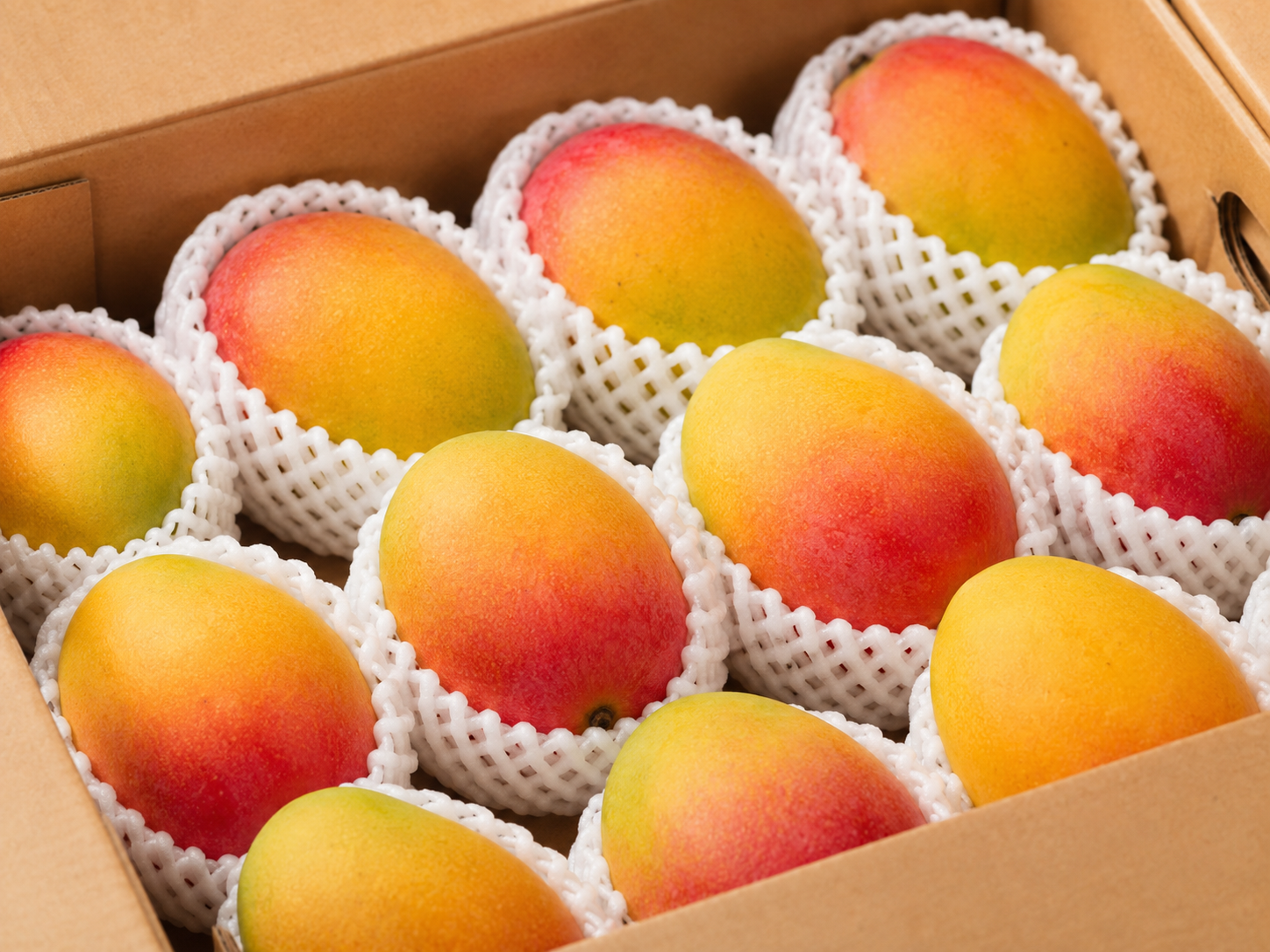
The lightest option is a printed label or sticker applied to a generic carton. Setup cost is minimal, lead time is short, and it works well for trial programmes and small volumes. Fruit stickers on individual pieces sit in the same category and can be applied at the packhouse where the line supports it.
The middle option is a stock carton with a single-colour or two-colour print of your logo and product name. Print plates are needed but the cost is modest, and this is where most mid-size distributors land.
The full option is a bespoke carton with full-colour print, your own dieline and your own board specification. This is the best-looking result and the most demanding on volume and lead time.
Minimum order quantities and why they exist
Carton printing is a plate-based process. The setup cost is the same whether the run is 2,000 cartons or 50,000, so the printer sets a minimum to make the job viable. For single-colour print on a stock carton, minimums are usually reachable within a single container. Full-colour bespoke cartons generally require several containers’ worth of print, and the surplus is held for your next order rather than wasted.
Where a first order does not reach the minimum, printing the full run and holding the balance is often still the better economics if you intend to repeat. Where you are not yet sure, start with applied labels and convert to print once the programme proves itself.
Lead times to plan around
Artwork approval is the slowest step and the one buyers control. Expect several working days for the exporter to check your artwork against packing dimensions and label requirements, then a proof cycle for your sign-off. Plate production and printing takes further time after approval, and the cartons then have to reach the packhouse before your fruit is picked.
The practical rule is to start artwork at least six to eight weeks before your intended loading date on a first bespoke run. On a repeat order using existing plates, the lead time collapses to the printing schedule alone. For seasonal products this means artwork work happens in the pre-season window, not when the fruit is ready.
What has to appear on the carton regardless of branding
Your design shares the panel with mandatory content. Country of origin, product name and variety, class or grade, size or count, net weight, packer or dispatcher identification and the lot or traceability code all have to be present and legible. Destination markets add their own requirements, and EU-bound cartons in particular have specific marking rules.
Bring your artwork to the exporter before it is finalised rather than after. A design that leaves no space for the mandatory panel has to be redrawn, and that is a lead time cost nobody plans for. What the traceability code needs to carry is covered in our guidance on reading an Egyptian produce quotation, where the same lot references appear on the commercial documents.
Certification marks
If your programme is GLOBALG.A.P or BRC covered, the certification numbers and any permitted marks belong on the carton in the correct form. Certification logos have usage rules and cannot simply be placed as decoration. The scope of what each certificate actually covers is set out in our note on GLOBALG.A.P and BRC on an Egyptian order.
Cost effect on your landed price
Printed cartons add a per-unit cost over generic packing, and the exact figure depends on print complexity, board grade and run length. On a 4 kg fruit carton the increase is small relative to the fruit value. On a low-value bulk product the same increase is proportionally larger and may not be worth it. Ask for the quotation both ways so you can see the difference on your own landed cost rather than estimating it.
Send your artwork, target carton format and expected annual volume to our team on WhatsApp at +20 10 9911 1918. We will confirm the minimum order quantity, the print lead time and the cost difference against generic packing, usually the same working day.