
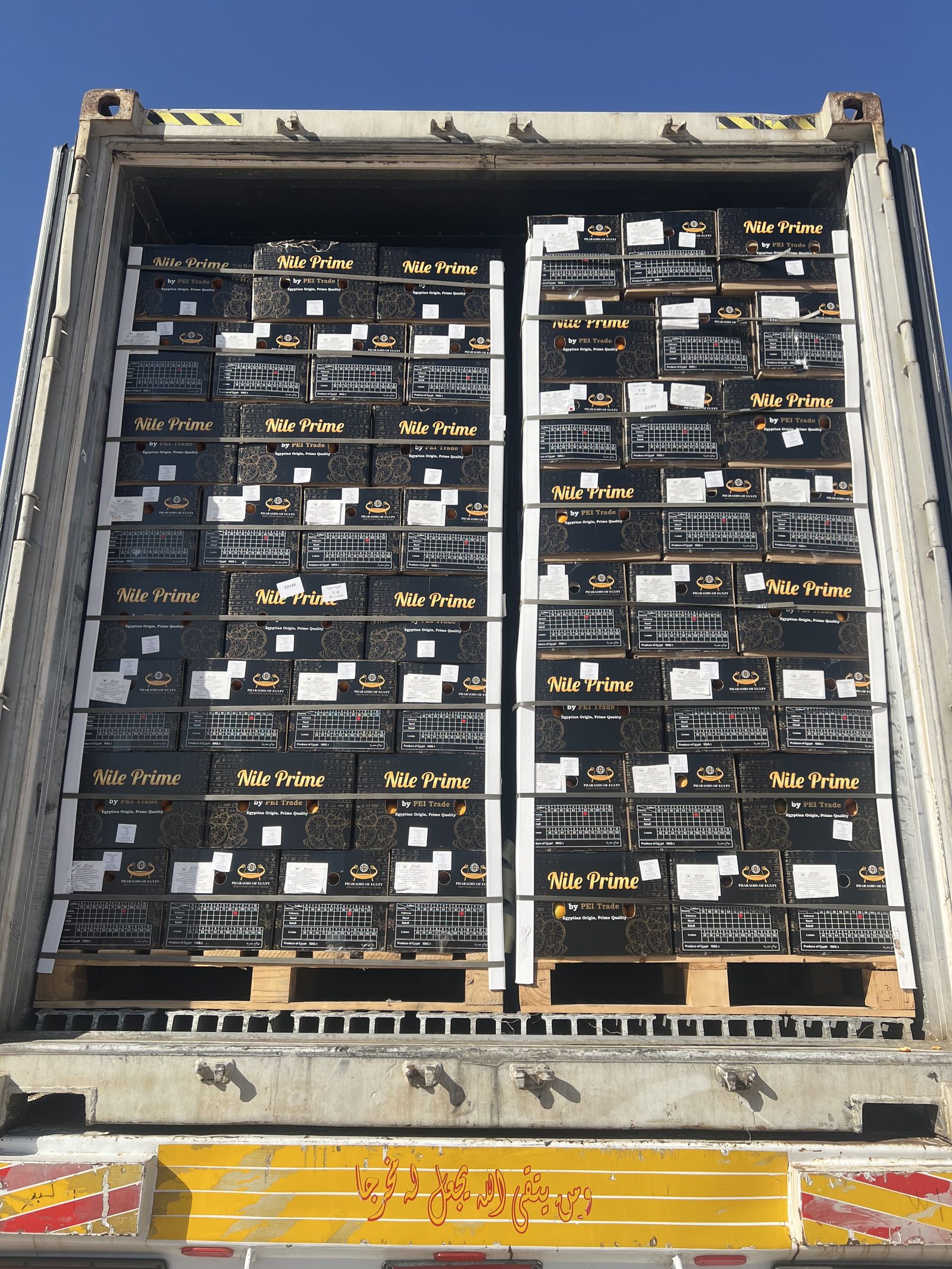
A 40ft high cube reefer holds 20 to 21 euro pallets. If you need six, the arithmetic stops working. Paying for a full box to move a third of a box turns a competitive FOB price into an uncompetitive landed cost, and this is where a lot of first-time importers quietly give up on Egypt. There are two ways around it, and they are not the same thing.
Shared full container versus true LCL
A shared full container, sometimes called a co-load, is one FCL booked by the exporter and split between two or three buyers going to the same destination port. The container is sealed in Egypt and opened at destination. Each buyer pays a share of the freight. Transit and handling are identical to a normal FCL, and the fruit is touched exactly as many times as it would be on a dedicated load. This is the better option and it is what we arrange most often.
True LCL, or groupage, means your cargo goes to a consolidation warehouse, is loaded with unrelated cargo from unrelated shippers, and is deconsolidated at destination. It is more widely available and requires no coordination with another buyer. It is also harder on the product, because there are two extra handling points and the consolidator’s warehouse may not hold your temperature.
| Factor | Shared FCL | True LCL |
|---|---|---|
| Minimum | Around 5 pallets | 1 pallet or less |
| Handling points | Same as FCL | Two additional |
| Temperature control | Continuous | Gaps at consolidation and deconsolidation |
| Transit | Standard sailing | Add 5 to 12 days |
| Destination charges | Predictable | Often the largest surprise |
Which products tolerate LCL
Ambient and dry lines handle groupage well. Dried herbs and spices, dried onion and garlic, legumes, dates, rice and canned or jarred products can sit in a consolidation warehouse without deteriorating. These are the products we routinely quote in part loads, and they underpin the small-lot dried herb and spice programmes we run for mid-size distributors.
Fresh produce is a different matter. Fresh fruit and vegetables in true LCL are a risk we normally advise against, because the temperature gap at consolidation is exactly where quality is lost and it is also where responsibility becomes impossible to assign. IQF product sits in between. Frozen LCL exists and works, but only through consolidators with genuine minus 18 C warehousing, and you should ask for the facility name rather than an assurance. For fresh, shared FCL is the answer.
Watch the destination charges
The common mistake is comparing an LCL sea freight quote against an FCL sea freight quote and concluding LCL is cheap. LCL is priced per cubic metre or tonne, whichever is greater, and the sea leg is often the smaller half of the total. Deconsolidation, terminal handling, documentation and delivery order fees at destination can equal or exceed the freight. Ask your forwarder for an all-in landed figure to your warehouse door before you compare anything. The same discipline applies to reading the supply side of the deal, which we cover in our note on reading an Egyptian produce quotation.
How we handle small orders
For orders below full container volume, we quote three ways so you can see the difference: a dedicated FCL for reference, a shared FCL if we have a matching buyer on your lane, and LCL where the product suits it. All are quoted under Incoterms 2020, most commonly FOB or CFR, with GLOBALG.A.P and BRC documentation supplied as standard. Payment on trial and part loads is normally by advance transfer or CAD, as set out in our guide to payment terms for Egyptian produce orders.
Tell us the products, quantity in pallets or kilos, and your destination port, and we will come back the same day with all three options priced. Message our export desk on WhatsApp at +20 10 9911 1918.