When a shipment runs late, the first question a buyer asks is who to chase. On a mixed container from Egypt the honest answer is that it depends entirely on which stage the container is in, and mid-size buyers new to the lane often spend two days chasing the wrong party. Mapping the roles once, before the first order, is worth more than any amount of expediting afterwards.
The exporter
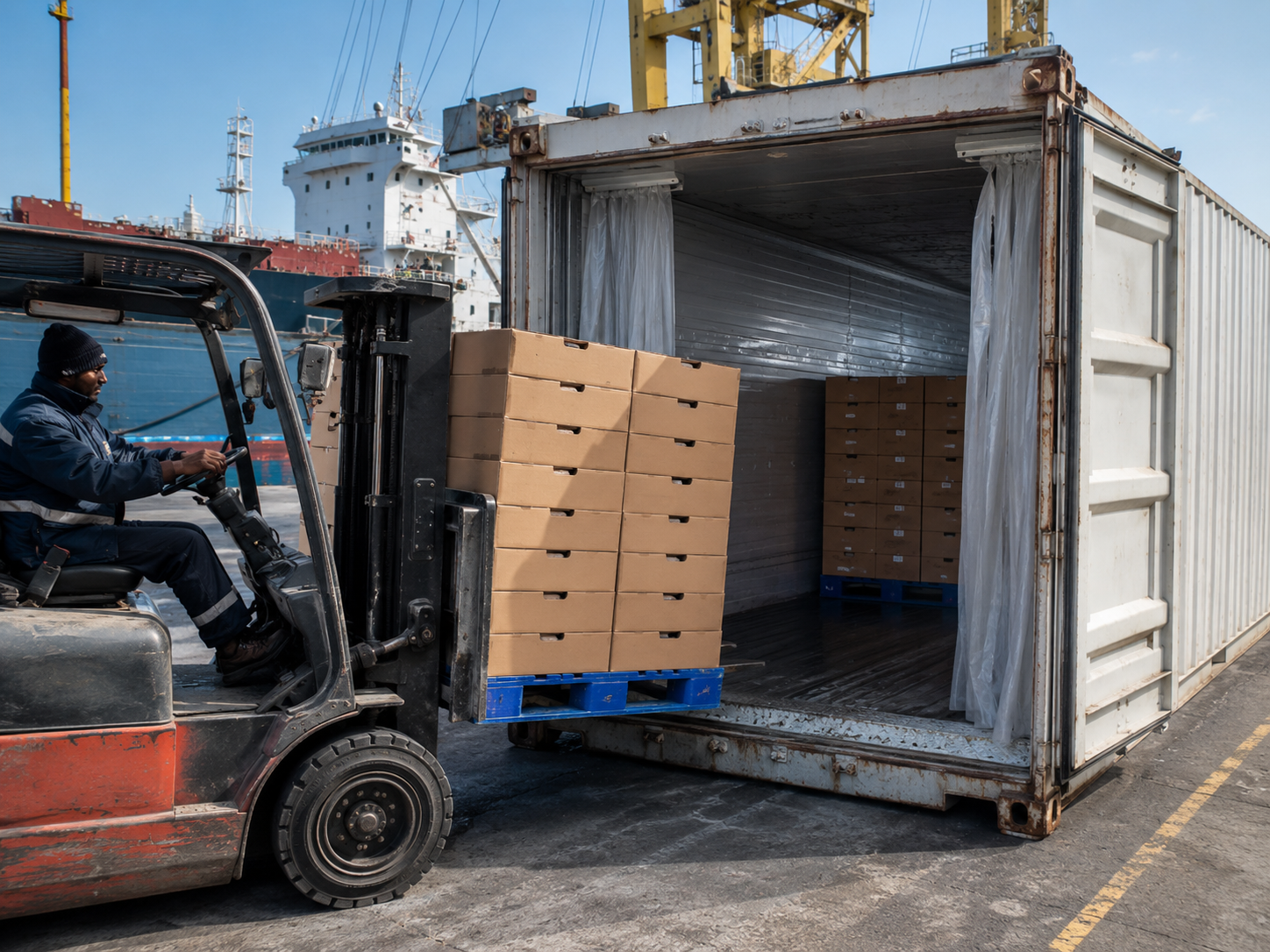
We consolidate the products, book the packing slots, apply the labelling and build the pallets. Our responsibility runs from procurement through to the moment the container is sealed and handed to the carrier at the terminal, assuming FOB or CFR terms. Practically, that also covers the export-side documents we originate: the commercial invoice, the packing list, the certificate of origin application, and the phytosanitary certificate request that goes to the agricultural quarantine authority.
On a mixed load there is one extra job that falls to us and nobody else: reconciling the set point, the loading sequence and the stowage plan so that products with different requirements can share the same box. That is a technical decision, and it is covered in our note on reefer set point conflicts in mixed containers.
The freight forwarder
The forwarder books space with the shipping line, arranges the empty container to the packhouse, handles the export customs declaration and issues or arranges the bill of lading. If the forwarder is nominated by the buyer, which is common on FOB terms, the buyer instructs them directly and we coordinate the loading date with them. If the forwarder is ours, on CFR or CIF terms, we do that coordination and the freight sits inside our price.
Which arrangement is better depends on volume. A buyer moving a container a month often gets a better rate through their own forwarder. A buyer taking part-loads is usually better served by ours, because groupage requires the forwarder to be sitting on the same consolidation, as explained in our guide to LCL and part-container shipping from Egypt.
The shipping line
The line supplies the equipment, carries the box and is responsible for maintaining the reefer set point during the voyage. Line responsibility is narrower than most first-time buyers assume. It covers the container and the machinery, not the condition of the fruit inside it. If a temperature deviation occurs, the download from the container’s own recorder is the line’s record, and it is the primary evidence in any claim. Independent loggers packed inside the cargo are yours, and they are worth using.
Schedule changes, transhipment delays and equipment shortages all sit with the line, and neither the exporter nor the forwarder can override them.
The customs broker at destination
Your broker clears the goods on arrival. They need the full document set in advance, not on the day, and they need it to match. The most frequent delay we see is a mismatch between the description on the invoice and the description on the phytosanitary certificate on mixed loads, where several products are listed and one line has been transposed. Sending the draft documents to your broker for checking before the original set is couriered removes almost all of this, and our note on documentation for a mixed Egyptian container sets out the full list.
Where the handover sits
Under Incoterms 2020, FOB puts risk and cost onto the buyer once the goods are on board at the Egyptian port. CFR moves the sea freight cost to the seller but leaves risk transferring at the same point. CIF adds insurance to the seller’s account. DAP carries the seller’s responsibility all the way to a named place at destination, excluding import clearance and duties.
Knowing which of those you agreed tells you immediately who to call. Before the vessel sails, call us. After it sails, call the forwarder for schedule and the line for equipment. On arrival, call your broker.
Setting up your first shipment
If you are building a mixed container from Egypt for the first time and want the roles set out against your specific terms, send us the products and the destination and we will map it before you commit. Message the Peivana desk on WhatsApp at +20 10 9911 1918.