September and October are the awkward weeks in the Egyptian calendar. Mango and grape are winding down, citrus has not opened, and the winter vegetable programme is still in the ground. Buyers who plan around the gap keep their shelves supplied. Buyers who do not tend to place a rushed order in late October at the worst possible price. Here is what actually loads in those eight weeks.
What is in season
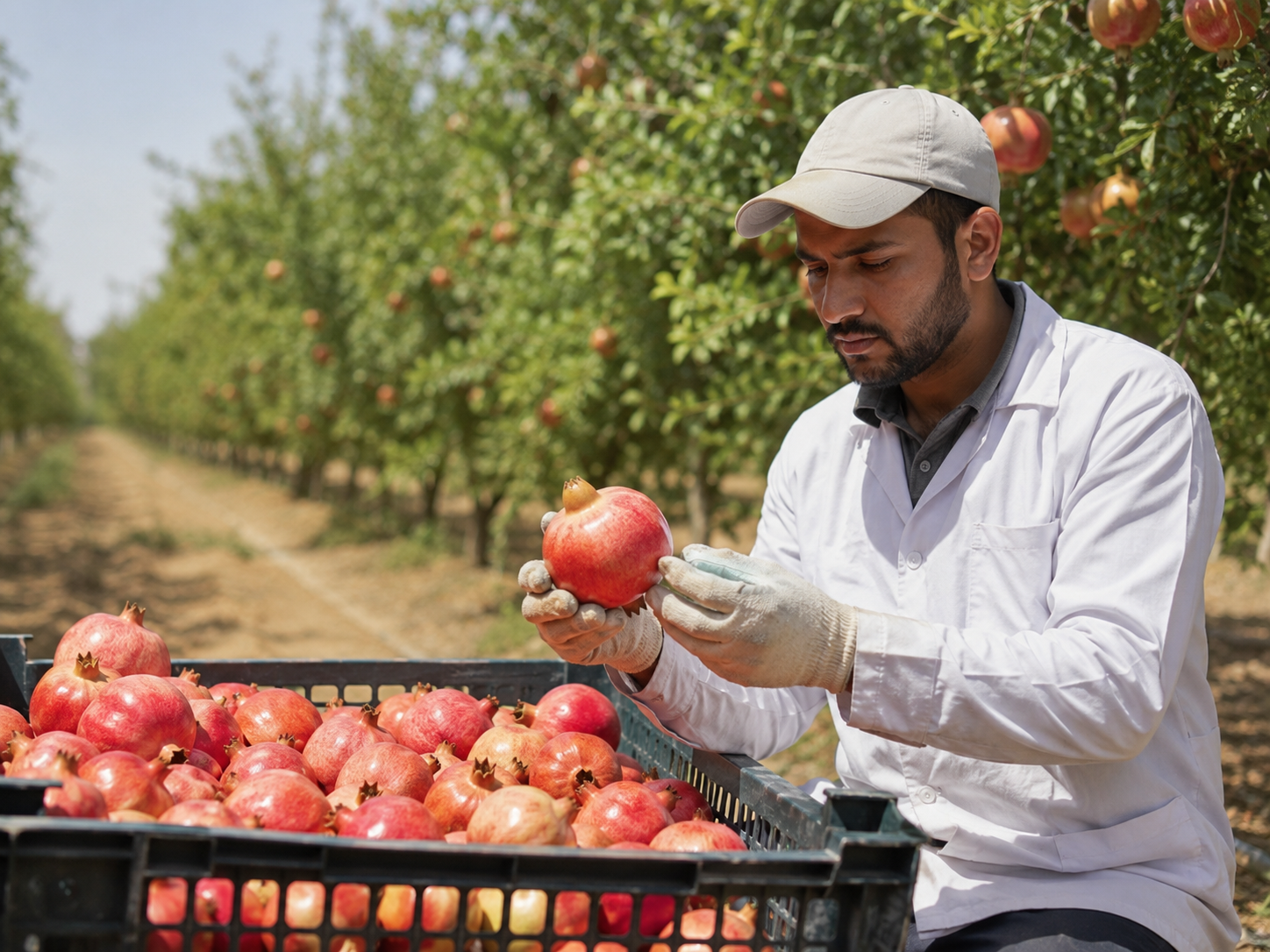
Pomegranate is the anchor product. Early varieties start in September and Wonderful comes into volume from October, running through to December. Sizing improves as the season progresses, so a September position gives you fruit sooner while an October or November position gives you better counts. Availability is set out in Egyptian pomegranate part-loads.
Dates run through the same window. The Zaghloul and Siwi harvest peaks from September into October, and semi-dry and dry material is available year round from store. Fresh Barhi is a short window and needs to be booked early.
Onion and garlic ship from store rather than from the field, so supply is steady through the gap. Red and golden onion in 10 and 25 kilogram bags, garlic in mesh bags or cartons. Prices in September and October reflect storage cost, so they sit above the June and July field-fresh level.
Sweet potato lifts from late September, with the first export cartons in October. Early lots are smaller in size grade than the November and December crop.
Taro opens in October. Guava overlaps the same weeks. Fresh herbs, including mint, basil, dill and rocket, are available continuously and are useful for topping out a load.
IQF products do not follow the fresh calendar at all. Frozen strawberry, okra and molokhia are produced in earlier seasons and drawn from cold store, so they ship through September and October without constraint, subject to a minus 18 degree set point that cannot be shared with fresh cargo.
What is not available
Be realistic about the gaps. Fresh strawberry does not start until November. Valencia and Navel oranges open in late November and December. Mandarin follows a similar timetable. Green beans, sugar snaps and broccoli are winter crops that begin in November. Artichoke is a December to April product. Mango is finished after September, and any offer of Egyptian mango in November is either cold-store material with limited shelf life or not Egyptian.
How to build the load
The practical approach through the gap is a two-temperature strategy. Either build one ambient or chilled load around pomegranate, dates, onion, garlic and sweet potato, all of which sit comfortably in a range around 5 to 8 degrees Celsius with the exception of sweet potato at 13 degrees, or run a separate frozen load for IQF. Do not attempt to combine the two. Sweet potato is the one product to watch, because it takes chilling injury at citrus temperatures and is better shipped with taro and onion than with pomegranate.
Minimum quantities in the gap are the same as the rest of the year. If you are unsure what a workable order looks like product by product, see minimum order quantities from Egypt.
Book the November slot now
The other reason to talk in August is the handover. Citrus and strawberry allocation for late November fills during September. Placing a gap-season order and a winter position in the same conversation usually gets you better freight and a firmer week.
Send your product list and discharge port for a same-day quote. WhatsApp +20 10 9911 1918.