
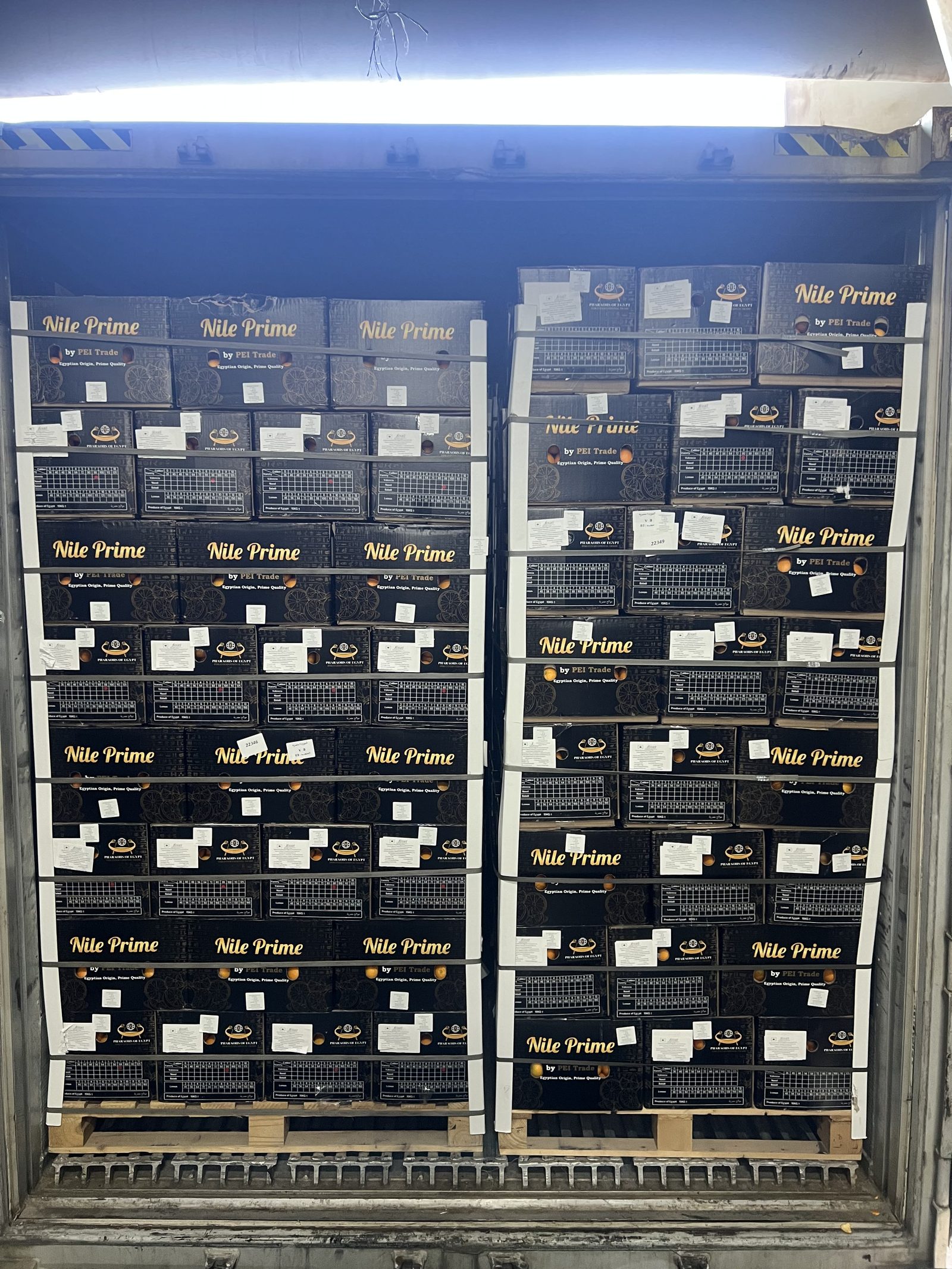
Mid-size buyers usually think about a mixed container in terms of products. Two pallets of citrus, one of pomegranate, half a pallet of herbs. The exporter thinks about it in terms of floor positions, because that is what the freight is charged against. Understanding the space maths will tell you where your money is actually going and where it is being wasted.
The footprint numbers
A 40 foot high cube reefer has roughly 11.6 metres of usable internal length once the machinery bulkhead is deducted, and about 2.29 metres of internal width. That gives 20 floor positions on 100 by 120 centimetre industrial pallets loaded in a single line, or 21 to 22 in some units depending on the make. Euro pallets at 80 by 120 centimetres fit differently: you can place two across the width, but the leftover width is dead space unless the cargo is stable enough to be stowed pinwheel fashion.
Internal height under the T-floor allows roughly 2.2 to 2.5 metres of stack, and the red load line must not be covered. Blocking the return air channel above the cargo is the single most common loading error and it will cost you arrival quality on the pallets at the door end.
What a half pallet really is
A half pallet in produce trading is normally a full pallet base loaded to half the usual tier count, not a physically smaller pallet. It occupies a full floor position. That matters, because the freight cost per position does not halve when your carton count does. A half pallet of pomegranate sitting in a 20 position container is carrying the same slot cost as a full one.
There are two ways to avoid paying for air. The first is double stacking two compatible half pallets into one position, which works when the lower product has enough carton strength to carry the load and both products share a set point. The second is topping the position with a lighter, higher-value product. Neither is possible if the two products need different temperatures, so check compatibility first. Our note on temperature and ethylene compatibility sets out which Egyptian products can share a box.
Weight, not just space
You can run out of payload before you run out of positions. A 40 foot high cube reefer typically permits 26 to 28 tonnes of cargo depending on the line and the road limits at both ends. Dense products fill that quickly. Onions in 25 kilogram bags, potatoes and citrus in 15 kilogram cartons will hit the weight ceiling around position 16 to 18 if loaded to full height. Lighter products such as herbs, green beans and punnet-packed berries hit the space limit long before the weight limit. A well-built mixed load pairs a dense product with a light one so both ceilings are approached together.
Where the money leaks
Three things waste slots more than anything else. Ordering an awkward quantity, such as 1.3 pallets of one product, which forces a two-position stow. Mixing carton footprints so pallets cannot be built square and overhang has to be avoided by dropping a tier. And leaving a position half empty rather than adding a filler product you would have bought anyway within the next month. Before you finalise, price the load per landed carton rather than per pallet, using the method in landed cost on an Egyptian part-load.
Send us the list
Give us your product list with target quantities and discharge port, and we will build the stow plan, tell you how many positions it takes and where you have room to add. Same-day quote. WhatsApp +20 10 9911 1918.