When you buy a half pallet rather than a full reefer, you inherit somebody else’s sailing. The container goes when the container goes, and your goods either make the cut-off or wait a week. Understanding how a sailing schedule is built is therefore worth more to a mid-size buyer than it is to a shipper who controls the whole box.
The three cut-offs, and why they are not the same date
Every booking has more than one deadline. The documentation cut-off, sometimes called the SI or shipping instruction cut-off, is when the line needs final bill of lading details. It is usually the earliest of the three. The VGM cut-off is when the verified gross mass declaration must be filed. The gate or port cut-off is when the physical container must be inside the terminal. On Egyptian services these commonly sit one to three days ahead of the vessel’s estimated time of departure, and they can be days apart from each other.
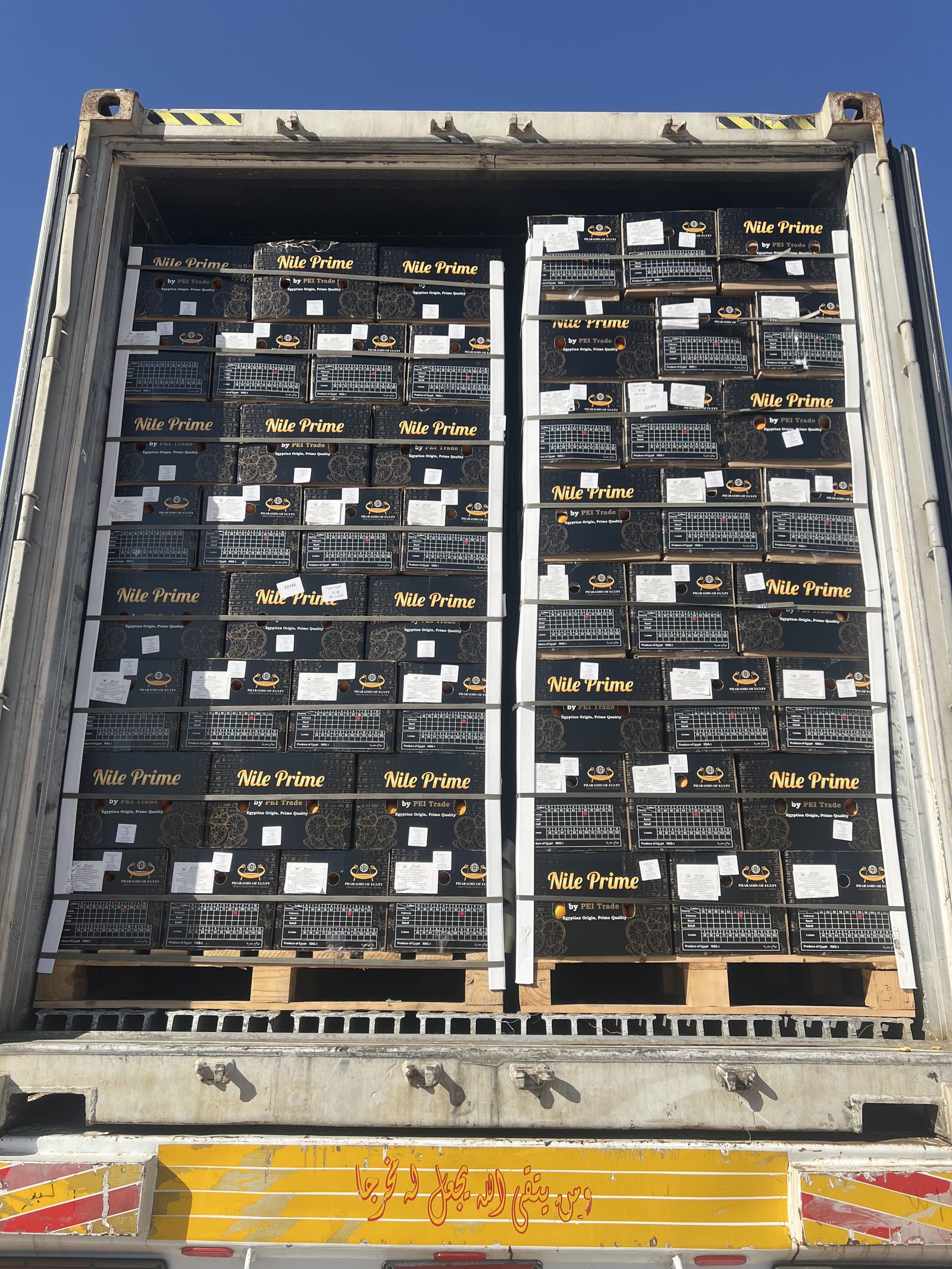
For a part-load this matters because your cartons have to be at the consolidation point well before the gate cut-off, not on it. The packhouse still has to receive your goods, stuff them alongside the other buyers’ pallets, seal and weigh the box, and truck it to the port. Two working days of buffer before gate cut-off is a reasonable planning assumption. Our day-by-day mixed container timeline shows how that sequence runs backwards from the sailing.
Direct services and transhipment
A schedule line that shows one vessel from Alexandria or Damietta to your discharge port is a direct service. A line showing two vessels, with a transhipment port in between, means your container is discharged, stored on the quay and reloaded onto a second vessel. Common transhipment hubs for Egyptian cargo include Port Said, Piraeus, Malta and Jebel Ali depending on the lane.
Transhipment is not inherently bad and is often the only option on smaller lanes. It does introduce three risks worth pricing in. The connection can be missed, which adds a week. The reefer must be plugged in on the quay during the wait, and monitoring at the transhipment port is less visible to you than at either end. And the total transit is longer, which matters for products with a short shelf life. On mango, guava, figs or grapes we recommend paying for a direct service where one exists. On onions, garlic, dates or frozen goods, transhipment is usually acceptable.
Published transit time versus realistic arrival
Schedules publish a transit in days from port of loading to port of discharge. That number does not include what happens on either side. Add the days between your goods arriving at the packhouse and the vessel departing. Add discharge, customs clearance and inspection at destination, which on an EU or UK entry point with a physical check can be several days. Add haulage from the port to your warehouse.
A published twelve-day transit from Alexandria to a northern European port frequently means goods on your racking around day nineteen to twenty-two from the day you confirmed the order. Plan sell-through from that date, not from the ETA on the schedule. Product-by-product shelf life figures are in our reference on shelf life on Egyptian mixed loads.
Free time starts at arrival, not at collection
The other reason to read the schedule carefully is that demurrage and detention clocks are tied to it. Free time at destination usually begins on discharge, so a delayed clearance eats into it immediately. If a sailing arrives on a Friday before a public holiday, you may lose most of your free days before anyone can move the box. Checking the arrival date against the destination calendar before booking costs nothing. The charges themselves are explained in our note on demurrage and detention on Egyptian reefer shipments.
Four questions to ask before you confirm
Ask which vessel and voyage number the booking is on. Ask for all three cut-off dates in writing. Ask whether the service is direct or transhipped, and through which port. Ask what free time the booking carries at destination. Those four answers turn a schedule from a marketing document into a plan you can order against.
Peivana consolidates mixed and part-load containers from Egypt with GLOBALG.A.P and BRC certified suppliers, and confirms cut-off dates and vessel details with every quote. To check which sailings suit your next order, message us on WhatsApp at +20 10 9911 1918.