
Bulk dried mango is bought on four specifications: moisture, water activity, cut style and grade. Under the Philippine National Standard PNS/BFAD 15:2007, dried mango must not exceed 15 per cent moisture and a water activity of 0.70 at 25 degrees Celsius, and is graded either Premium, cut from the cheek of the fruit, or Regular, cut from the remaining flesh.
A note on what this page is. Peivana is an Egyptian exporter of fresh produce. We do not process, stock or supply dried or dehydrated mango, and nothing here is an offer to sell it. This is a buyer’s guide, written because most pages on the subject quote numbers without saying where they come from. Every figure below is attributed to a published standard you can open and read.
Table of Contents
What Is Bulk Dried Mango?
Bulk dried mango is the product prepared from sound, mature ripe fruit of Mangifera varieties, processed by sun drying or another recognised method of dehydration, with or without added sweetening agent and food additives. That definition is taken from PNS/BFAD 15:2007, the Philippine national standard for dried mango products, which is the most detailed publicly available specification for the product.
The standard separates drying, removal of water by natural means such as sun drying, from dehydration, removal of moisture by artificial means. Both terms appear in offers and they are not interchangeable on a specification sheet, because colour and texture differ.
At the international level, dried mango also has its own trading standard: UNECE Standard DDP-25, part of the UNECE series on dry and dried produce. Like the other DDP standards it defines quality classes, tolerances, presentation and marking, and it is the reference most European buyers will name in a contract. Sizing of dried mangoes under DDP-25 is optional rather than mandatory.
Cut Styles: Halves, Slices, Cubes, Slabs and Strips
Cut style is the first thing to fix, because it drives yield, price and end use more than any other variable. PNS/BFAD 15:2007 lists six presentations and allows others provided they are distinctive and honestly labelled. The standard also sets texture by style: halves, slices, cubes, slabs and leathers should be chewy, flakes flaky and crisp.
| Cut style | Definition in the standard | Usual end use |
|---|---|---|
| Halves | Named presentation | Retail packs, snacking |
| Sliced | Named presentation | Retail packs, food service |
| Cubes / diced | Named presentation | Cereal, bakery, muesli inclusion |
| Slabs | Portions of sound ripe mango of characteristic colour, irregular in shape, size and thickness, excluding whole fruit | Industrial, further processing |
| Chunks, chips, strips | Named presentation | Snacking, trail mix |
| Leather, sheets, rolls | Permitted as an other style if distinctive and adequately described on the label | Confectionery, children’s snacks |
Bulk Dried Mango Grades: Premium and Regular
PNS/BFAD 15:2007 grades dried mango into exactly two classes, and the distinction is anatomical rather than cosmetic. Premium is obtained from the thickest portion of the flesh, the cheek, on both sides cut parallel to the seed. Regular is obtained from the remaining flesh after the cheeks are cut, including the fibrous portions of the fruit.
That distinction explains most of the price gap between two offers that look identical in a photograph. Premium comes from a limited part of each fruit, so yield per tonne of fresh mango is low and the product is uniform and free of fibre. Regular uses what is left. Neither is a defect grade; they are different cuts of the same fruit, and a buyer paying Premium money should ask which one is in the carton.
Separately, the UNECE DDP standards use their own quality classes, Extra, Class I and Class II, with the Extra class held to the strictest freedom from defects. A European contract may reference the UNECE class, an Asian supplier may quote the Philippine grade, and the two systems describe different things. Name both if both appear in your paperwork.
Moisture and Water Activity: 15 Per Cent and 0.70
Two numbers govern whether bulk dried mango keeps. PNS/BFAD 15:2007 sets moisture content at not more than 15 per cent and maximum water activity at 0.70 at 25 degrees Celsius. Moisture is determined by the vacuum oven method, AOAC Official Methods of Analysis 934.06; water activity by AOAC 978.18. Naming the method matters, because different methods on the same sample do not return the same figure.
Of the two, water activity is the one that decides microbial safety. Moisture tells you how much water is in the product; water activity tells you how much of it is available to microorganisms, and it is the parameter that predicts whether mould will grow in a sealed carton in a warm warehouse. A lot can pass on moisture and still fail on water activity if the sugar and solids balance is wrong. Specify both, or you have specified neither.
Shelf life is deliberately absent from this page. The Philippine standard requires a best before or consume before date reflecting defined storage conditions, but it fixes no period, because the answer depends on the water activity achieved, the barrier properties of the pack and the storage temperature. A flat shelf life quoted without those three conditions is a marketing figure, not a technical one.
Sulphites, Sugar and Labelling
Most bright orange bulk dried mango has been treated with sulphites to hold colour. PNS/BFAD 15:2007 permits sulphites at a maximum level of 3,000 mg/kg, alongside acidifying agents, antioxidants such as ascorbic acid and sodium erythorbate, and humectants at good manufacturing practice levels.
For anyone selling into the European Union, the labelling threshold is far lower than the processing limit. Sulphur dioxide and sulphites are listed in Annex II of Regulation (EU) No 1169/2011 and must be declared where the level in the product as sold exceeds 10 mg/kg expressed as total SO2. They are the only entry on that allergen list carrying a numeric threshold. If your customer wants an unsulphured product, that is a separate specification and usually a browner, darker product, not a defect.
Added sugar is the other silent variable. The standard allows sweetening agents, including sugars, honey and artificial sweeteners, so sweetened and unsweetened product can both be sold as dried mango. Ask for the ingredient declaration in descending order of proportion.
How Bulk Dried Mango Is Packed
Bulk dried mango is a shelf-stable product, so it moves in dry containers rather than reefers, which is the single largest cost difference against fresh fruit. It is normally packed into a food-grade inner liner inside an outer carton, with the liner doing the moisture-barrier work and the carton doing the stacking.
Carton net weights, cartons per pallet and pallets per container are not standardised for this product and vary by processor. There is no industry default to quote here, so ask each supplier for their own figures in writing and check the arithmetic against the container payload before you compare prices.
The standard does require that the visible part of a package is representative of its entire contents, and that the produce is packed so as to protect it properly. That is the clause behind rejecting a lot where the top layer is Premium and the body of the carton is Regular.
What to Put on the Spec Sheet
A bulk dried mango enquiry that names the standard and the test method gets a comparable offer. One that says dried mango, bulk, best price gets six offers describing six different products. The table below is the minimum set.
| Parameter | Requirement to state | Source or method |
|---|---|---|
| Moisture content | Not more than 15 per cent | PNS/BFAD 15:2007, 4.3.2; AOAC 934.06 vacuum oven |
| Water activity | Maximum 0.70 at 25 degrees Celsius | PNS/BFAD 15:2007, 4.3.3; AOAC 978.18 |
| Grade | Premium (cheek) or Regular (remaining flesh) | PNS/BFAD 15:2007, 4.3.5 |
| Quality class | Extra, Class I or Class II if the contract is written to UNECE | UNECE Standard DDP-25 |
| Cut style | Halves, sliced, cubes, slabs, chunks, chips, strips or leather | PNS/BFAD 15:2007, 3.2 and 3.3 |
| Sulphites, processing limit | Maximum 3,000 mg/kg | PNS/BFAD 15:2007, Table 1 |
| Sulphites, EU declaration | Declare above 10 mg/kg as total SO2 | Regulation (EU) No 1169/2011, Annex II |
| Sweetening | Sweetened or unsweetened, with the agent named | PNS/BFAD 15:2007, 4.2.1 |
| Carton weight and pallet plan | Confirm in writing with each supplier | Not standardised; no industry default |
Bulk Dried Mango: Common Buyer Questions
What moisture content should bulk dried mango have?
Not more than 15 per cent, under Philippine National Standard PNS/BFAD 15:2007, section 4.3.2, measured by the AOAC 934.06 vacuum oven method. The same standard sets a maximum water activity of 0.70 at 25 degrees Celsius, measured by AOAC 978.18. Specify both figures and both methods, because a lot can pass on moisture and still fail on water activity.
What is the difference between Premium and Regular dried mango?
Premium is cut from the thickest flesh, the cheek, on both sides parallel to the seed. Regular is cut from the flesh remaining after the cheeks are removed, including the fibrous portions. The grading is defined in PNS/BFAD 15:2007, section 4.3.5. Premium yields less per tonne of fresh fruit and is more uniform, which is why it costs more.
Which standard covers dried mango in international trade?
UNECE Standard DDP-25 covers dried mangoes as part of the UNECE series on dry and dried produce, defining quality classes Extra, Class I and Class II, tolerances, presentation and marking. Sizing under DDP-25 is optional. The Philippine national standard PNS/BFAD 15:2007 is the more detailed public specification for composition and quality factors.
How much sulphite is allowed in dried mango?
PNS/BFAD 15:2007 permits sulphites at a maximum of 3,000 mg/kg as a processing limit. The EU labelling threshold is separate and much lower: Annex II of Regulation (EU) No 1169/2011 requires sulphur dioxide and sulphites to be declared where the level exceeds 10 mg/kg expressed as total SO2. Sulphites are the only allergen on that list with a numeric threshold.
How long does bulk dried mango keep?
No single figure applies. Shelf life depends on the water activity actually achieved, the barrier properties of the packaging and the storage temperature. PNS/BFAD 15:2007 requires open date marking with a best before or consume before date reflecting defined storage conditions, but it does not fix a period. Ask each supplier for their figure together with the three conditions behind it.
Does Peivana supply dried mango?
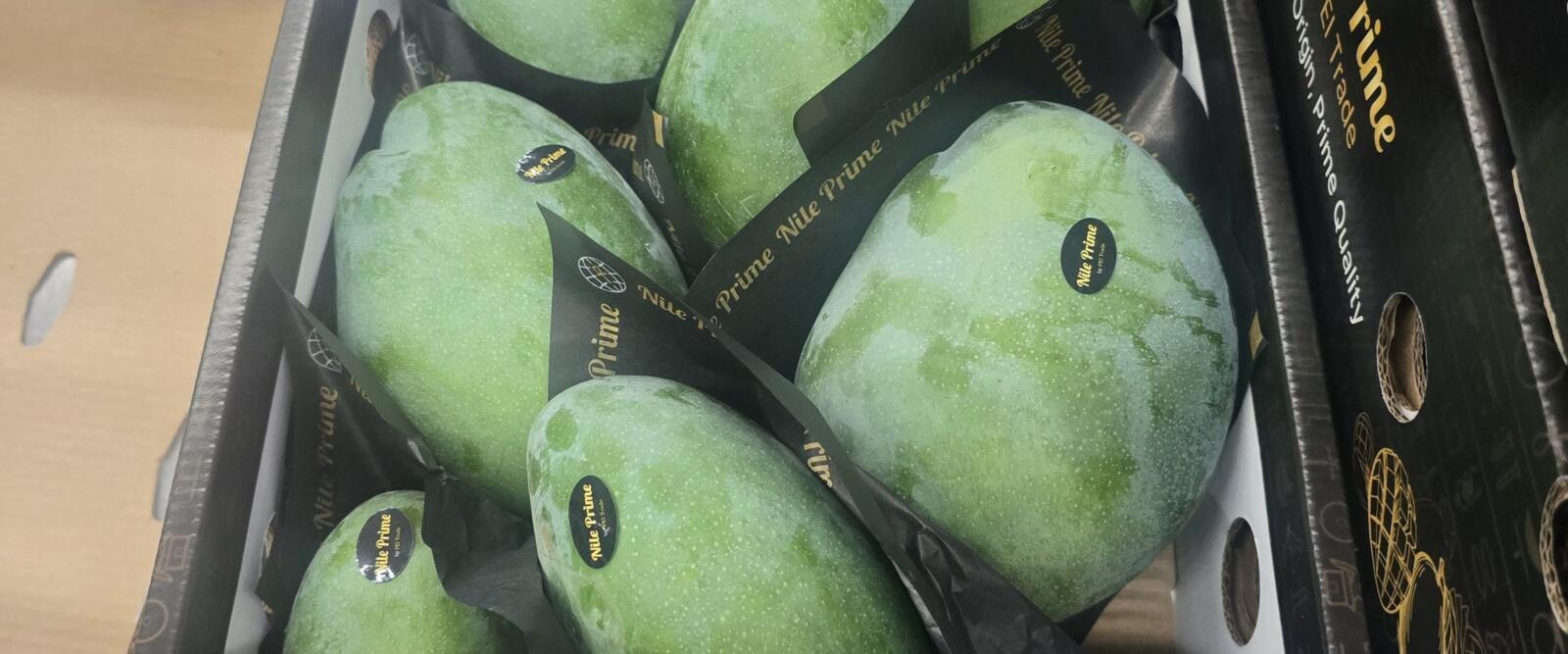
No. Peivana exports fresh Egyptian mango and other fresh produce, and does not process, stock or supply dried or dehydrated mango. This page is a buyer’s guide to the specifications and standards, not a product offer. Buyers looking for fresh Egyptian mango in cartons, half pallets or mixed containers are welcome to enquire.
If You Came Here for Egyptian Mango
To repeat the point made at the top: Peivana does not supply bulk dried mango, and we would rather say so than take an enquiry we cannot fill. What we do export is fresh Egyptian mango, in 5 kg cartons at 200 per standard pallet, from half-pallet trial quantities up to a full 40 ft reefer. If it is dried mango you need, take the specification checklist above to a processor.
Written by the Peivana export desk. Peivana is an Egyptian fresh produce exporter and is not a neutral reviewer of the dried fruit trade. Sources cited: PNS/BFAD 15:2007, UNECE Standard DDP-25, Regulation (EU) No 1169/2011. Last updated 26 August 2026.