
The pallet on an Egyptian part-load is a one-way item. It is bought new or near-new for the shipment, heat treated, loaded, and it stays at your warehouse. No exchange scheme reaches Egypt, so the cost sits in your landed price whether or not anyone itemises it. This page covers which pallet to specify, what ISPM 15 requires, and how a half-pallet build actually works.
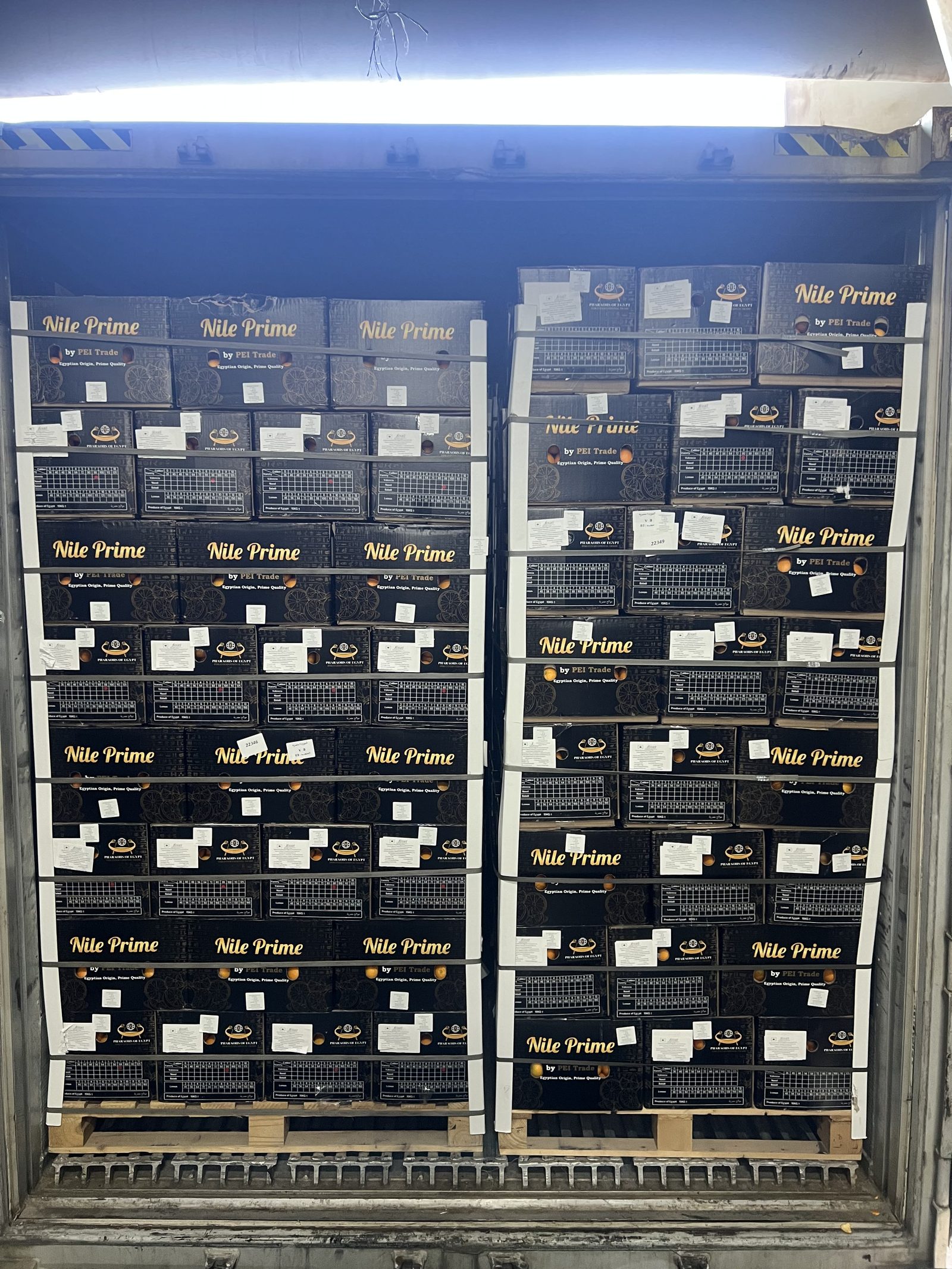
Which pallet to specify
| Format | Footprint | Per 40 ft HC reefer | Best for |
|---|---|---|---|
| Euro pallet | 1200 x 800 mm | About 20 to 21 | EU and UK buyers with racking built to it |
| Standard or industrial | 1200 x 1000 mm | About 20 | GCC, Africa, general trade |
| Half pallet | Full footprint, half height | Two stacked per position | Mixed loads with several products |
The point most often misunderstood: a half pallet on a part-load is normally a half-height build on a full-size pallet base, not a pallet with half the footprint. Two half-height builds stack into one container floor position. That is what lets six products travel in a container that has twenty positions.
ISPM 15: the stamp is not optional
Wooden pallets leaving Egypt must be heat treated and marked under ISPM 15. The mark carries the country code, a registered treatment facility number and the treatment code HT, burned or stencilled onto at least two opposite sides. Untreated wood is refused at most destinations and can result in the whole consignment being held, re-palletised at your cost, or returned.
Ask for a photograph of the stamp on the pallets used for your order, not a generic certificate. Plastic pallets and pressed-wood pallets fall outside ISPM 15 entirely because they contain no raw wood, which is why some buyers into strict destinations specify them despite the higher unit cost.
What the pallet costs you
Pallet, stretch wrap, corner boards and strapping are usually quoted inside the FOB carton price rather than as a line item, which makes them invisible until you compare two offers with different build standards. When you compare quotes, ask directly whether the price includes a heat treated pallet, corner boards and strapping, or whether the goods are supplied loose-loaded. A loose-loaded price will always look better and will cost more to handle at your end.
Loose loading, cartons stacked directly on the container floor with no pallet, still happens on some Egyptian routes and saves the pallet cost and a little container volume. It costs several hours of manual unloading at destination and offers no protection against carton crushing in the lower layers. For a part-load with multiple products it is impractical, because there is no way to keep the products separate.
How the build should reach you
- One product and one lot per pallet, never mixed within a build
- Label on two adjacent faces, showing product, variety, count, carton quantity and lot code
- Corner boards on all four corners under vertical and horizontal strapping
- Stretch wrap that does not cover the carton vents on the lower layers
- Overhang of zero, cartons flush to the pallet edge or inside it
Overhang is the detail worth checking on arrival photographs. A carton that hangs 20 mm past the pallet edge loses a large share of its stacking strength, and it is always the bottom layer that pays.
Related reading: landed cost on an Egyptian part-load shows where the pallet cost lands in the per-carton number, and checking a part-load on arrival covers what to photograph before breaking a build down.
Peivana is the exporter, not a neutral reviewer. To confirm the pallet format and build standard for your next part-load, message us on WhatsApp at +20 10 9911 1918 with your destination and racking size.