
Sharing a reefer with another buyer cuts your freight cost by roughly the share of the container you do not use, and it introduces a second party into your delivery schedule. Both facts matter equally. This page sets out how a co-load from Egypt is actually structured, what is negotiable, and the two situations where a mid-size buyer should decline it.
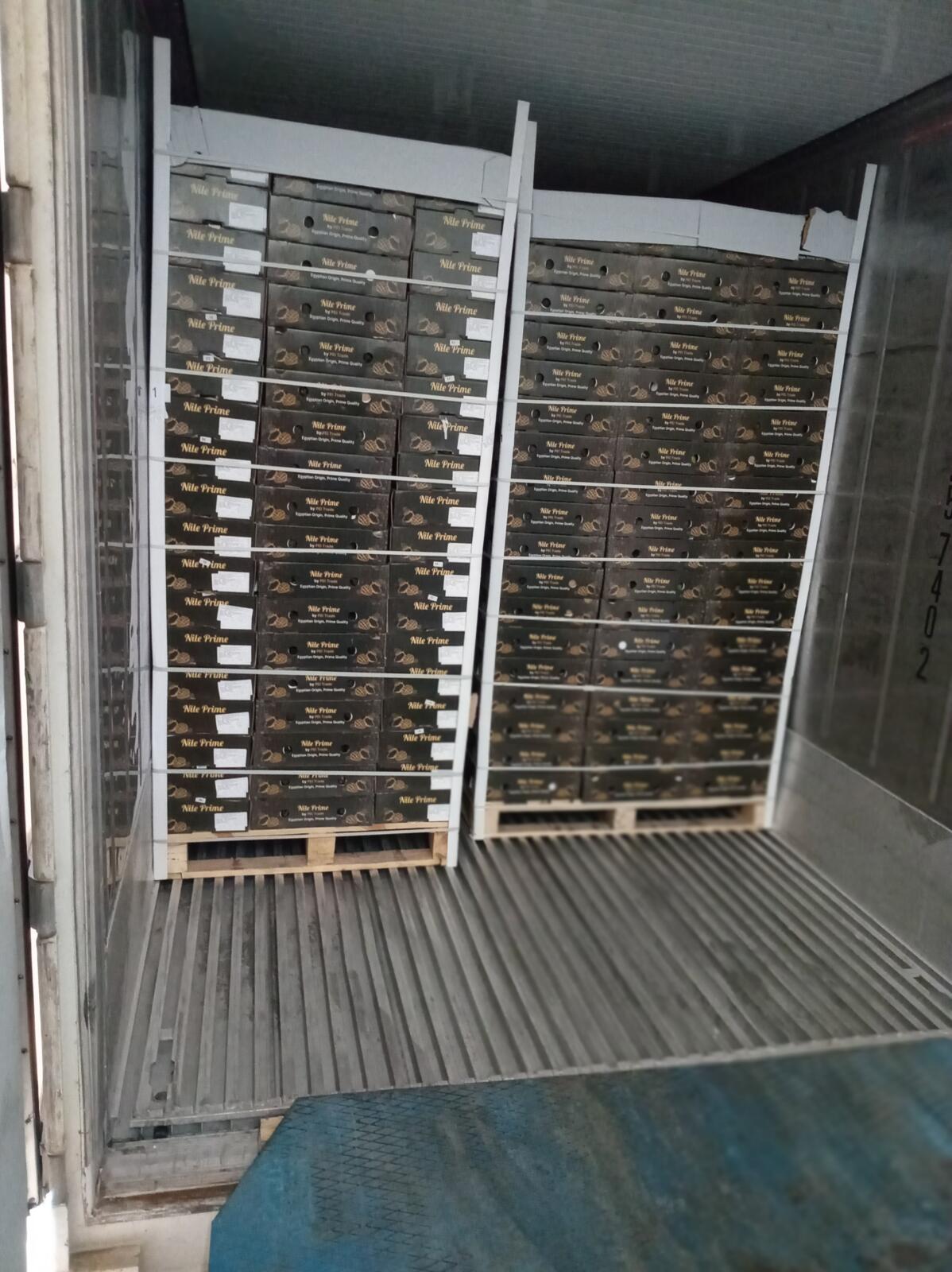
Three ways a shared container is structured
| Structure | Bill of lading | Customs clearance | Risk if the other party delays |
|---|---|---|---|
| Exporter consolidates | One per buyer, issued against one master | Separate, each buyer clears their own | Low, the exporter reallocates space |
| Freight forwarder groupage | House bill per buyer | Separate | Low, but transit is longer |
| Two buyers book direct together | One bill, one named consignee | One entry, then a domestic transfer | High, one party controls the cargo |
The third structure is the one that causes disputes. If the container moves on a single bill of lading naming one consignee, the other buyer legally has no cargo, only a claim against their co-buyer. It can work between two established partners in the same city. Between strangers introduced by a supplier, it should be avoided.
How the freight is split
Ocean freight on a reefer is charged per container, not per pallet, so the split is by agreed share of floor positions rather than by weight. A buyer taking eight of twenty positions pays 40 percent of the ocean freight, and normally 40 percent of the origin charges. Destination charges follow the bill of lading, so under a house bill structure each buyer pays their own terminal handling and clearance directly.
What is not split proportionally is demurrage and detention. Those accrue against the container, and if one party clears in two days while the other takes nine, the charge is generated by the slower party but billed against the box. Agree in writing, before booking, that demurrage is charged to whichever party caused it. That single sentence prevents most co-load arguments.
Product compatibility comes first
Your co-loader chooses the set point as much as you do. A container carrying your pomegranate at 6 C cannot also carry their lemon at 11 C. Before agreeing a share, ask what the other party is loading, at what temperature, and whether any of it produces ethylene. Two products that both look like fruit can be entirely incompatible in one box.
Ask about certification too. If the other party ships a product that triggers additional border inspection at your destination, the whole container waits for that inspection, including your pallets. On a perishable load the wait is the cost.
When to decline a shared container
- When your product needs a set point more than two degrees away from theirs
- When your delivery date has no slack, because a co-load adds a second party who can delay the sailing
- When the structure offered is one bill of lading with the other buyer as consignee
- When the other party is clearing through a different port of entry than yours
In every other case a co-load is a reasonable way to hold a per-carton freight cost close to a full container rate while ordering half the volume. It is the standard way mid-size buyers keep Egyptian origin in their programme without carrying inventory they cannot sell through.
Related reading: reefer freight rate season from Egypt explains why the per-pallet cost rises in autumn, and temperature and ethylene compatibility covers which products can legitimately share one set point.
Peivana is the exporter, not a neutral reviewer. To ask what space is open on an upcoming sailing from Alexandria or Damietta, message us on WhatsApp at +20 10 9911 1918 with your destination port and pallet count.