
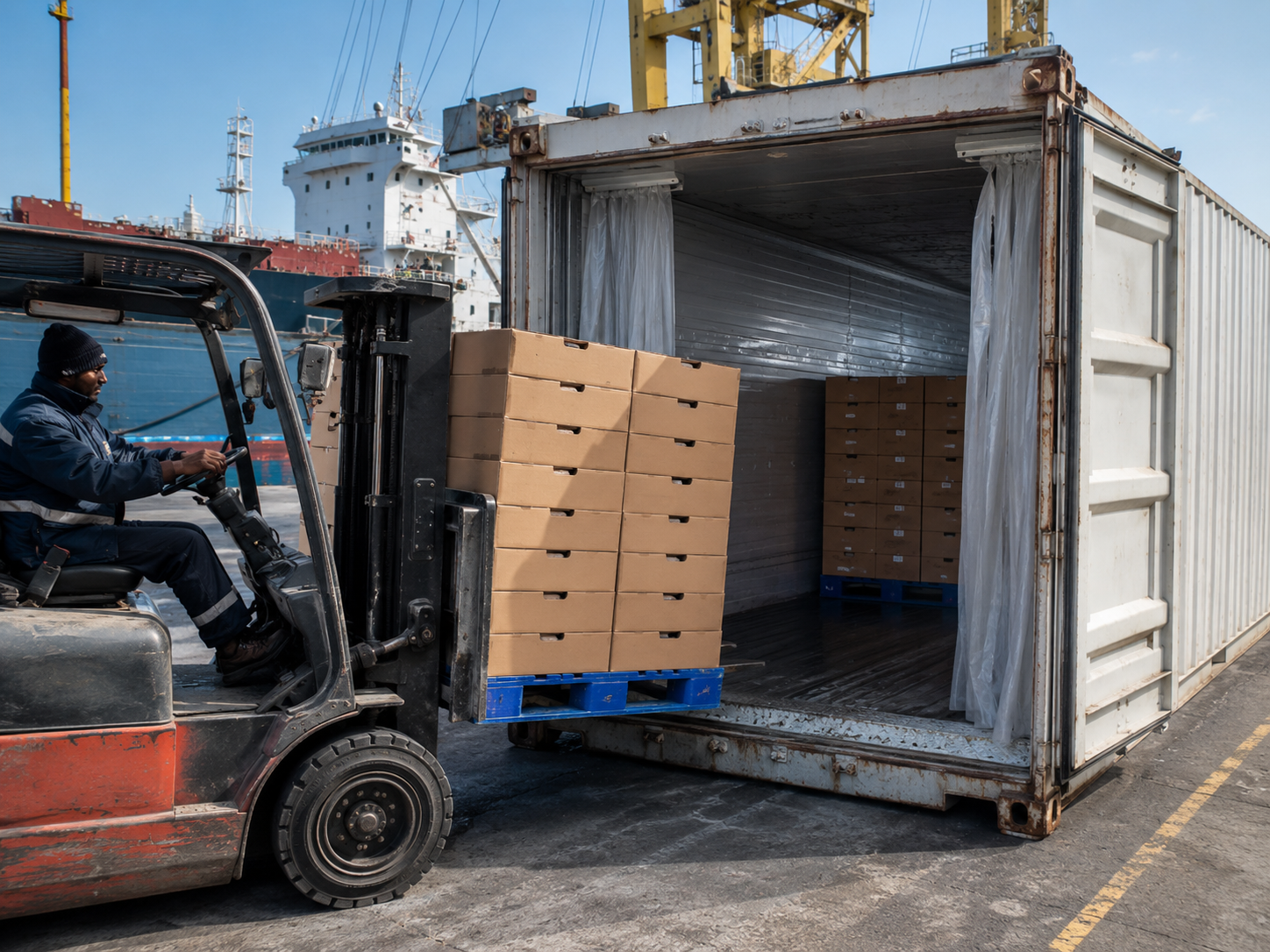
Insurance is the line most mid-size buyers skip when they are ordering half a pallet at a time. The reasoning is understandable. The consignment value is modest, the premium feels like an extra cost on a thin margin, and the container has arrived fine three times running. The problem is that a part-load buyer carries the same total loss exposure as a full container buyer, proportionally, while having far less control over how the container is packed, routed and handled.
What cover you already have, and what it is worth
Carrier liability is not insurance. Under the Hague-Visby rules a shipping line’s liability is capped by package or by weight, and the cap is low enough that on most produce it will not come close to replacing the cargo. Reefer machinery breakdown is also commonly excluded or heavily limited in the bill of lading terms. Recovering from a line requires proving fault, and temperature deviation inside a mixed container is very hard to attribute when several shippers’ goods sat under the same set point.
If you buy on CIF, the seller arranges insurance, and this is where part-load buyers are most often surprised. CIF obliges the seller to provide minimum cover, historically Institute Cargo Clauses C, at 110 percent of the invoice value. Clauses C is a named perils cover. It responds to events like vessel sinking, fire, collision and general average. It does not respond to a reefer running warm, to condensation, to rough handling inside the box or to theft. A buyer who assumes CIF means comprehensive cover has assumed something the Incoterm does not say.
Buying the right cover on a part-load
Institute Cargo Clauses A is the all risks wording and is what most perishable cargo should sit under. On produce it should be extended to include refrigeration machinery breakdown, usually with a stated minimum breakdown duration such as 24 consecutive hours, and rejection cover if your market has a history of border refusals. Read the exclusions on inherent vice carefully. No cargo policy pays for fruit that was already at the end of its life when it was loaded, which is why a pre-shipment temperature record matters to a claim.
On FOB and CFR terms the risk transfers to you at the origin port, so the cover is yours to arrange from that point. If you import regularly, an open cover or annual marine policy declared shipment by shipment is almost always cheaper and simpler than insuring each part-load separately, and it removes the temptation to skip the small ones. Where the risk transfer point sits under each term is set out in our note on Incoterms 2020 on Egyptian part-loads.
The complication a shared container adds
In a mixed reefer, a general average declaration or a total loss affects every consignment in the box, and each buyer claims separately under their own policy. That works cleanly only if your documents identify your goods precisely. Your insurer will want the commercial invoice, the packing list showing your pallet and carton numbers, your share of the bill of lading or the house document issued to you, and the temperature download for the container. How those documents are split between part-load buyers is covered in our note on documents on a shared Egyptian container.
Two practical habits reduce claim friction. Insure to CIF value plus ten percent even when you buy FOB, so the sum insured reflects landed value rather than goods value. And photograph your pallets at unloading before the cartons are broken down, with the container number and seal visible.
Peivana ships mixed and part-load consignments from Egypt under GLOBALG.A.P and BRC certified supply, with documentation issued per buyer so each consignment can be insured and claimed independently. For a same-day quote or to discuss cover on your next part-load, message us on WhatsApp at +20 10 9911 1918.