
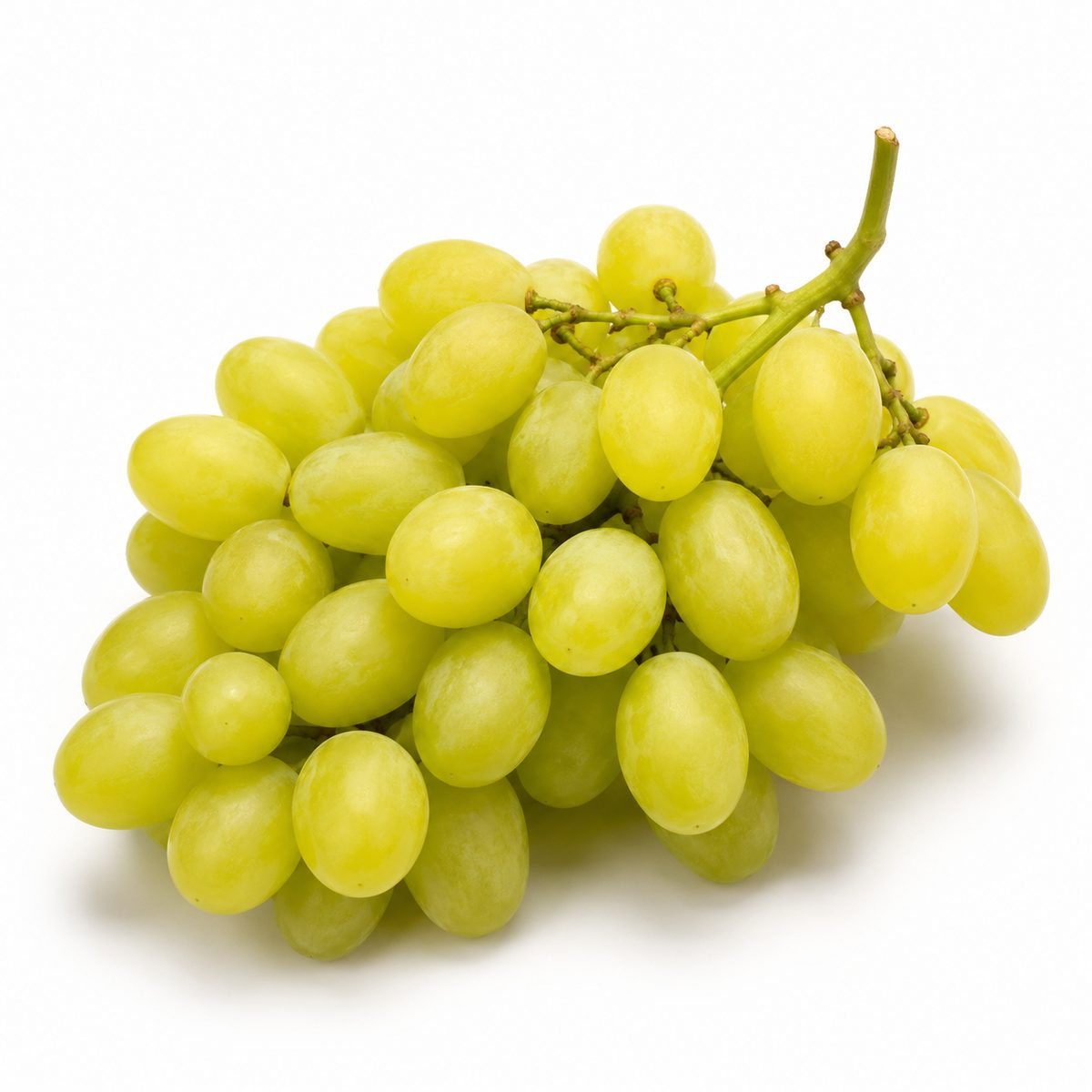
The Egyptian table grape season runs roughly from mid May to late August, which puts it in the last few weeks now. For mid-size buyers this is often the most workable point in the season, because the exporters holding programme volume have already shipped their committed containers and half pallet quantities become easier to place.
What is still picking in August
The early varieties are finished. Early Sweet, Prime and Superior Seedless close out from late June into July. What remains available in August is the later material, principally Crimson Seedless, with some Autumn Royal and Red Globe depending on the growing area. Crimson is the workhorse of the late season, red skinned, firm berry, and it holds up better in transit than most of the earlier white varieties.
Buyers looking for Flame or Superior in August are generally being offered stored fruit. Storage is legitimate for grapes and can be done well, but ask for the harvest date and the cold store entry date before you commit, because the shelf life you have left at destination depends entirely on those two figures.
Pack formats and half pallet quantities
Two formats dominate. Loose bunches in a 4.5 or 5 kg carton with a perforated liner and a sulphur dioxide pad, which suits wholesale markets and repacking operations. Or punnets, typically 500 g in a vented plastic clamshell, packed 8 or 10 to a carton, which is what retail programmes take.
On a Euro pallet, a grape pallet typically carries 80 to 100 cartons depending on carton height. A half pallet is therefore in the region of 40 to 50 cartons, which is 200 to 250 kg in punnets or around 220 kg in the 4.5 kg loose format. That is a realistic minimum for a single grape line inside a mixed container.
How that fits against the other lines you might want in the same container is set out in our overview of minimum order quantities from Egypt by product.
Cold chain and the sulphur dioxide question
Grapes ship at 0 to 1 degree Celsius at 90 to 95 percent relative humidity. Pre-cooling has to be forced air and has to happen within hours of harvest, not the next day. Grapes that go into the container warm will show stem browning and berry shatter on arrival regardless of how well the reefer runs.
Sulphur dioxide pads are standard on Egyptian export grapes and control botrytis during transit. There are two things to confirm before ordering. First, whether your destination market permits SO2 pads, since a small number of buyers and some organic programmes do not. Second, the pad type, because slow release dual phase pads suit longer transits and single phase pads suit short Mediterranean routings. Using the wrong pad on a long transit produces bleached patches on the berry, which is a cosmetic defect but a chargeable one.
Grapes sit in the 0 to 2 degree band, which means they travel comfortably with pomegranate and fresh strawberry but not with mango or greenhouse vegetables. The full set of rules is in our note on temperature and ethylene compatibility in mixed Egyptian reefers.
Certification and paperwork
Egyptian grapes for the EU and UK need a phytosanitary certificate and, in practice, a GLOBALG.A.P certified supplier. Residue testing against the destination MRL list should be done before loading, not after. Our suppliers are GLOBALG.A.P certified with BRC certified packhouses, and residue reports are available on request per lot.
Ordering for the last weeks of the season
Booking lead time on grape part-loads is currently seven to ten days from confirmed order to gate-in. Loading is out of Alexandria for European destinations and Sokhna for the Gulf. All quotes follow Incoterms 2020, usually FOB or CFR at the named port.
Send your variety, format, quantity and destination port to our export team on WhatsApp at +20 10 9911 1918 and we will come back the same day with availability, a full specification and an indicative shipping date.