Fine vegetables are the category where mid-size buyers most often get squeezed out. A full reefer of green beans is 18 to 20 tonnes, which is more than most regional distributors and food service suppliers can turn over inside the shelf life. The practical answer is a part-load: two or three pallets of each line, sharing a container with other products that tolerate the same temperature. That is how we build most winter vegetable programmes, and planning for the 2026/2027 window starts now.
The window
Egyptian fine vegetables run from late October through April, with the strongest quality and the widest availability between December and March. The season exists commercially because it sits opposite the European field season, so buyers in Europe, the UK and the Gulf are covering a gap rather than competing with local supply. Acreage for the coming season is planted against indicated demand from September onward, which is why an enquiry made in August secures better allocation than one made in November.
Products and grades
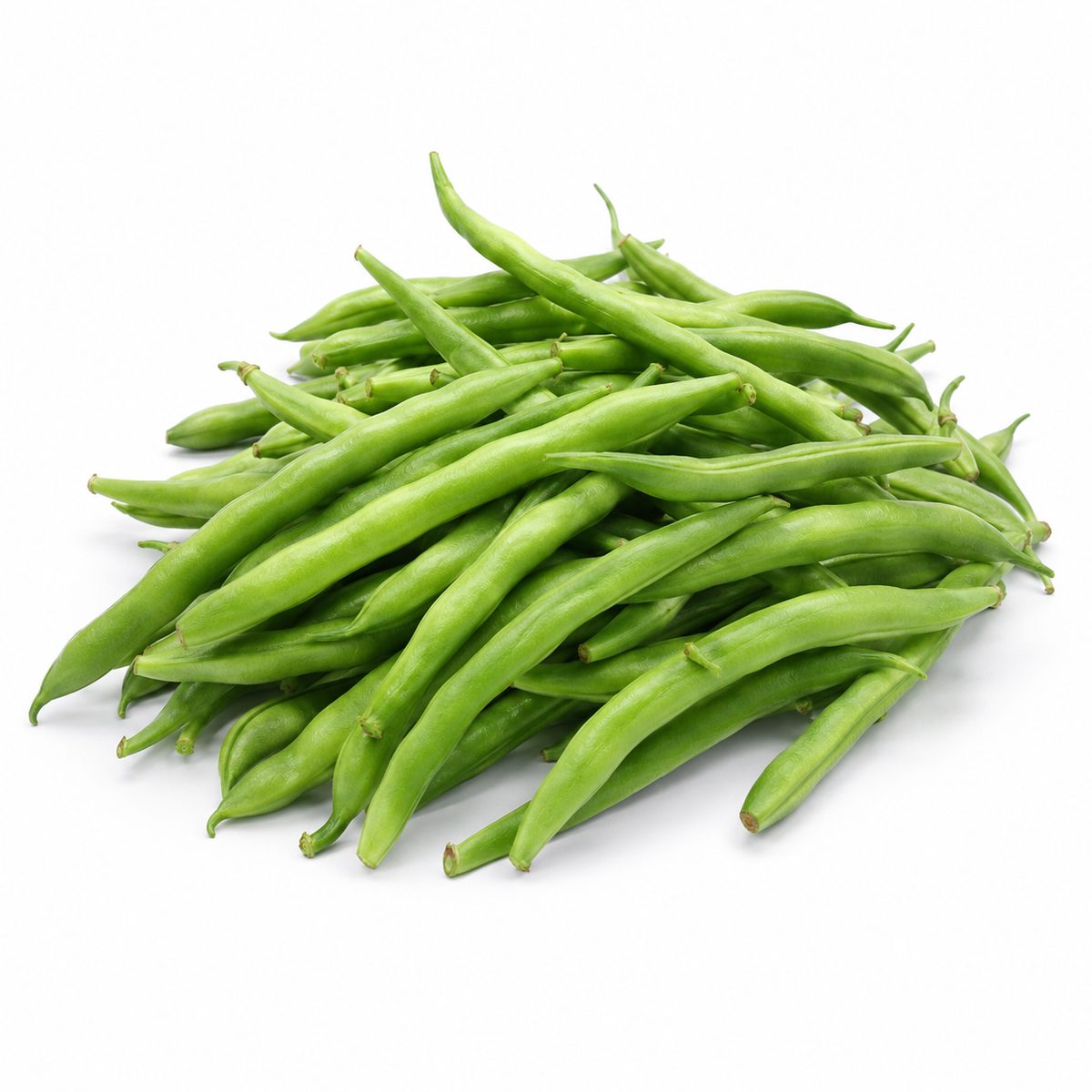
Green beans are the anchor line. Extra fine is graded at 6 mm diameter and below, fine at 6 to 9 mm, and bobby at 9 mm and above. Extra fine carries the premium and goes almost entirely to retail punnets. Bobby beans move into food service and wholesale. Sugar snap and mangetout are graded on pod length and flatness, typically 60 to 90 mm, and are sensitive to handling bruises in a way beans are not. Broccoli is cut in crown format at 8 to 12 cm head diameter, and cauliflower in 6 to 9 heads per carton. Fine asparagus and baby corn are available in smaller quantity and usually only on programme.
Pack formats
Retail-facing buyers take beans in 150 g, 200 g or 250 g flow-wrapped punnets, packed 10 to 20 punnets per carton. Wholesale and food service take 4 kg or 5 kg loose cartons, which cost less to pack and carry a lower unit price. Sugar snaps follow the same split. Broccoli and cauliflower ship in 5 to 8 kg cartons, usually with an ice-free liner rather than top ice, since top ice complicates mixed loading. Own-brand printing on the carton is straightforward on runs above one pallet, and is covered in our note on private label packing for mid-size distributors.
Half pallets and shared containers
A standard Euro pallet of 5 kg bean cartons holds 100 to 120 cartons at a tier height that fits a 40ft high cube reefer. We build half pallets at 50 to 60 cartons where a buyer wants three or four lines rather than two. Fine vegetables sit comfortably at 4 to 6 degrees Celsius, which puts them in the same temperature band as broccoli, cauliflower, herbs and most leafy items. They should not be loaded with onion, garlic or potato, which run warmer and carry odour transfer risk. The compatibility rules are set out in which Egyptian products can share one temperature.
Transit and shelf life
Sea transit from Alexandria or Damietta is 4 to 6 days to Italy and Greece, 8 to 11 days to Rotterdam and Felixstowe, and 5 to 8 days to Jeddah and Jebel Ali. Green beans hold 12 to 16 days from harvest at correct temperature, so the northern European legs use every bit of that budget and leave little room for a delayed sailing. Where a buyer needs shorter transit on a small quantity, air freight on 3 to 5 pallets is workable and often used to start a programme before switching to sea.
Getting a quotation
Send the lines you want, the grade, the pack format and the number of pallets per line, and we will confirm availability and price the same working day. Groupage options are covered in our guide to LCL and part-container shipping from Egypt. Reach Peivana on WhatsApp at +20 10 9911 1918.