
Fruit and vegetables importers source Egypt for a window rather than a year: citrus runs December to April and mango July to November, so the first question is which weeks of your calendar Egyptian origin is meant to fill. The second question decides your cost per carton, and it is whether you take a full 40 ft reefer or a share of one.
This guide is written for the mid-size importer who is not booking a container a week. Peivana is an Egyptian exporter, so treat this as a supplier explaining how the loading side works, not as neutral advice. The numbers below come from our own carton and container specifications and are the ones we quote against.
Table of Contents
Full container or part load: the first decision
| Order unit | In the 5 kg carton | In the 5 kg box | Pallet positions |
|---|---|---|---|
| Half pallet | 100 cartons, 500 kg | 90 cartons, 450 kg | Half a position |
| Full pallet | 200 cartons, 1,000 kg | 180 cartons, 900 kg | 1 |
| 20 ft reefer | 2,000 cartons, 10,000 kg | 1,800 cartons, 9,000 kg | 10 |
| 40 ft reefer | 4,160 cartons, 20,800 kg | 3,744 cartons, 18,720 kg | 21 |
Most importers who ask for a full reefer only need two pallets of a product, not twenty. Splitting those two pallets across four half pallets keeps the same 2,000 kg but gives you four data points on a new origin instead of one. The maximum payload is 25 tonnes on a 40 ft reefer, a 20 ft reefer and a road reefer alike, and on the road reefer 26 positions of the 5 kg carton come to 24,700 kg net, which sits just inside that cap.
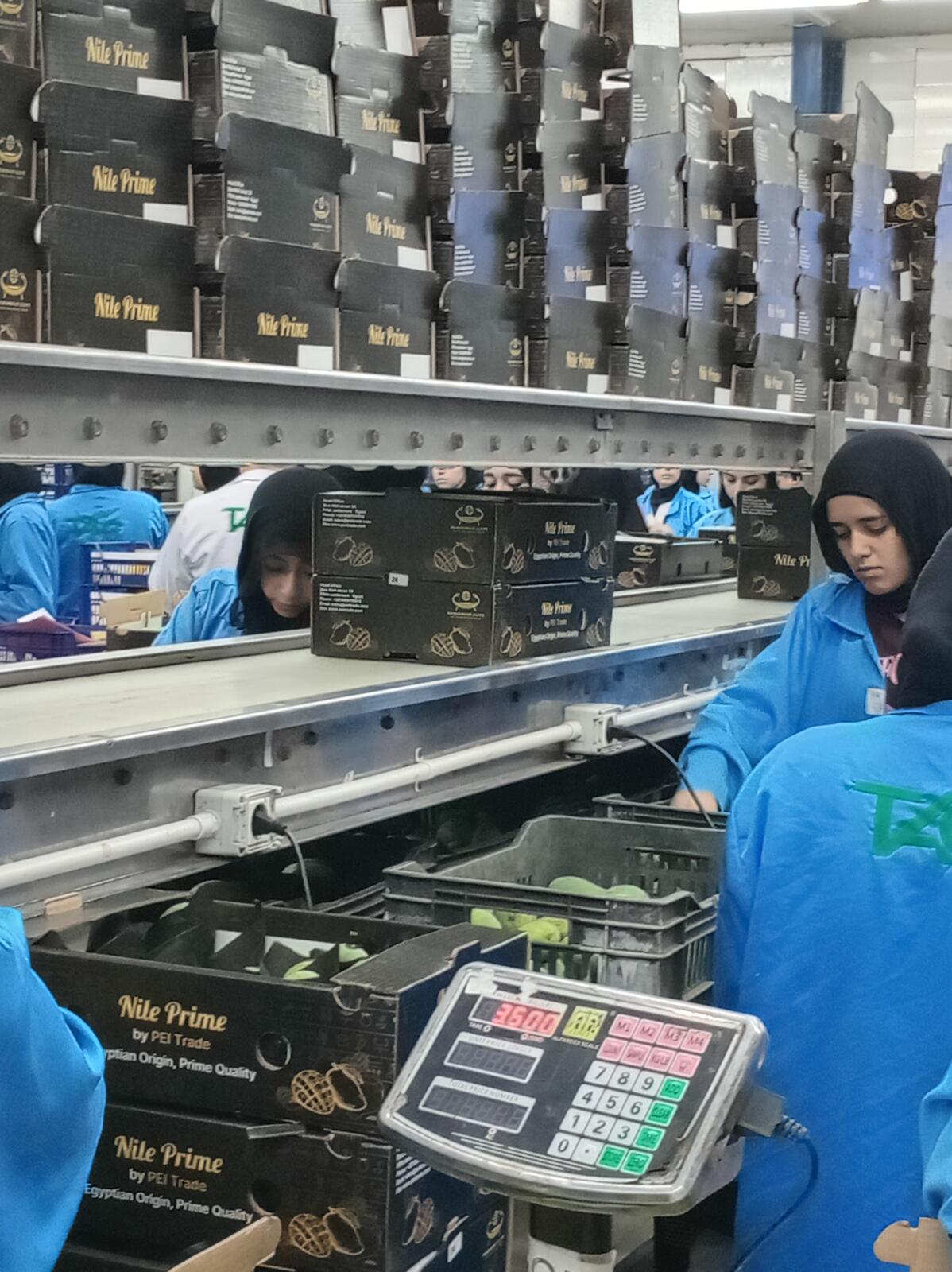
The temperature rule that decides what shares a box
| Product | Carrying temperature | Can it travel with mango? |
|---|---|---|
| Mango | 10 to 12 degrees Celsius | Reference product |
| Citrus | 4 to 6 degrees Celsius | No — 4 to 8 degrees colder than mango needs |
| Table grapes | 0 to 1 degrees Celsius | No — 9 to 12 degrees colder than mango needs |
A reefer runs one set point for the whole container, so the coldest product in the plan dictates the temperature every other product must survive. Mango cannot share a container with citrus or with table grapes. Held at a citrus or grape set point, mango takes chilling injury and does not ripen properly afterwards, and the damage is invisible when the doors close in Egypt. It appears on your floor, once the container is released and the claim window has already narrowed.
This is why a mixed container is built around one temperature family rather than around whatever the buyer would like to try. Products sharing a set point can share the box. Products that do not, cannot, however neatly the loading plan is drawn. The compatibility rules, including ethylene, are set out in our guide to mixing products in one Egyptian reefer.
Checking a loading plan before you approve it
Three checks catch most errors. First, does the total weight land inside the sanity band? A full 40 ft reefer of mango must land between 18.7 and 20.8 tonnes net, because the 5 kg box gives 18,720 kg and the 5 kg carton gives 20,800 kg. Anything above that band is gross weight, not net, or the wrong pack format.
Second, does the pallet count reconcile? Twenty-one positions in a 40 ft reefer, ten in a 20 ft. Third, is there one set point, and does every product in the plan belong to it? These three checks take a couple of minutes and are worth more than a supplier reference, because they test the plan in front of you rather than someone else’s experience.
Where importers lose money on a mixed container
Fixed cost is the first leak. Phytosanitary certificate, certificate of origin, bill of lading, export clearance and inspection are billed per shipment, not per carton, so halving the quantity doubles the per-carton share of that block. Ask for it as a separate line on the quote instead of buried in a per-carton price.
The second leak is shared risk. On a mixed container your goods travel with another buyer’s paperwork, and a delay on their documents holds your pallets too. Ask who the co-loaders are and who clears first. The third is Incoterm confusion: FOB, CFR and DAP move the cost of the same shipment to very different places, and the definitions published by the International Chamber of Commerce are the ones a dispute will be read against. Our note on Incoterms 2020 on Egyptian part loads covers which one fits a part load.
How to open with an Egyptian supplier
Send eight lines: product and variety, count size, pack format, quantity in cartons or pallets, destination port, Incoterm, loading week, and any label requirement. That is normally enough for a same-day price. Then start at a size you can absorb if the fruit disappoints, and grade the supplier over two shipments rather than one.
The importers who last are the ones who open small and check the loading plan themselves. A first order of four half pallets tells you more about a packhouse than a full reefer of one product ever will.
Mohamed Barakat, Export Manager, Peivana
Common questions from fruit and vegetables importers
What do fruits and vegetables importers need to decide first when sourcing from Egypt?
Which weeks of the calendar Egyptian origin is meant to fill, and whether the order is a full reefer or a part load. Egyptian citrus runs December to April and mango July to November, so Egypt is a seasonal window rather than a year-round origin.
How much fruit fits in a 40 ft reefer from Egypt?
For mango, 4,160 cartons and 20,800 kg net in the 5 kg carton, or 3,744 cartons and 18,720 kg net in the 5 kg box. The container takes 20 standard pallets plus one euro pallet, with a maximum payload of 25 tonnes.
Which products can share one refrigerated container?
Only products that share a carrying temperature, because a reefer runs one set point for the whole box. Mango carries at 10 to 12 degrees Celsius, citrus at 4 to 6 and table grapes at 0 to 1, so mango cannot travel with citrus or with grapes.
Can an importer buy less than a full pallet from Egypt?
Yes. A half pallet is 100 cartons and 500 kg net in the 5 kg carton, or 90 cartons and 450 kg net in the 5 kg box. Splitting a first order into several half pallets gives more information about a new supplier than a single full pallet.
How do I check an Egyptian supplier’s loading plan?
Check three things. A full 40 ft mango reefer should land between 18.7 and 20.8 tonnes net. The pallet count should be 21 positions for a 40 ft reefer or 10 for a 20 ft. And every product in the plan should belong to one temperature set point.
What pack formats do Egyptian exporters offer importers?
A 5 kg carton at 200 per standard pallet and a 5 kg box at 180 per standard pallet, with a 4.5 kg carton available on request. There is no 4 kg or 6 kg carton, so a quote built on one of those cannot be compared per kilo without conversion.
Sourcing your first Egyptian shipment
Peivana builds mixed containers for buyers who are not booking a full reefer, with half pallets as the starting unit and a quote normally returned the same working day. Send the products, count sizes, pack format, quantities, destination port, Incoterm and loading week, and we will come back with a price and a loading plan you can check against the three tests above. WhatsApp +20 10 9911 1918.
Written by the Peivana export desk. Peivana is an Egyptian fresh produce exporter. Last updated 26 August 2026.