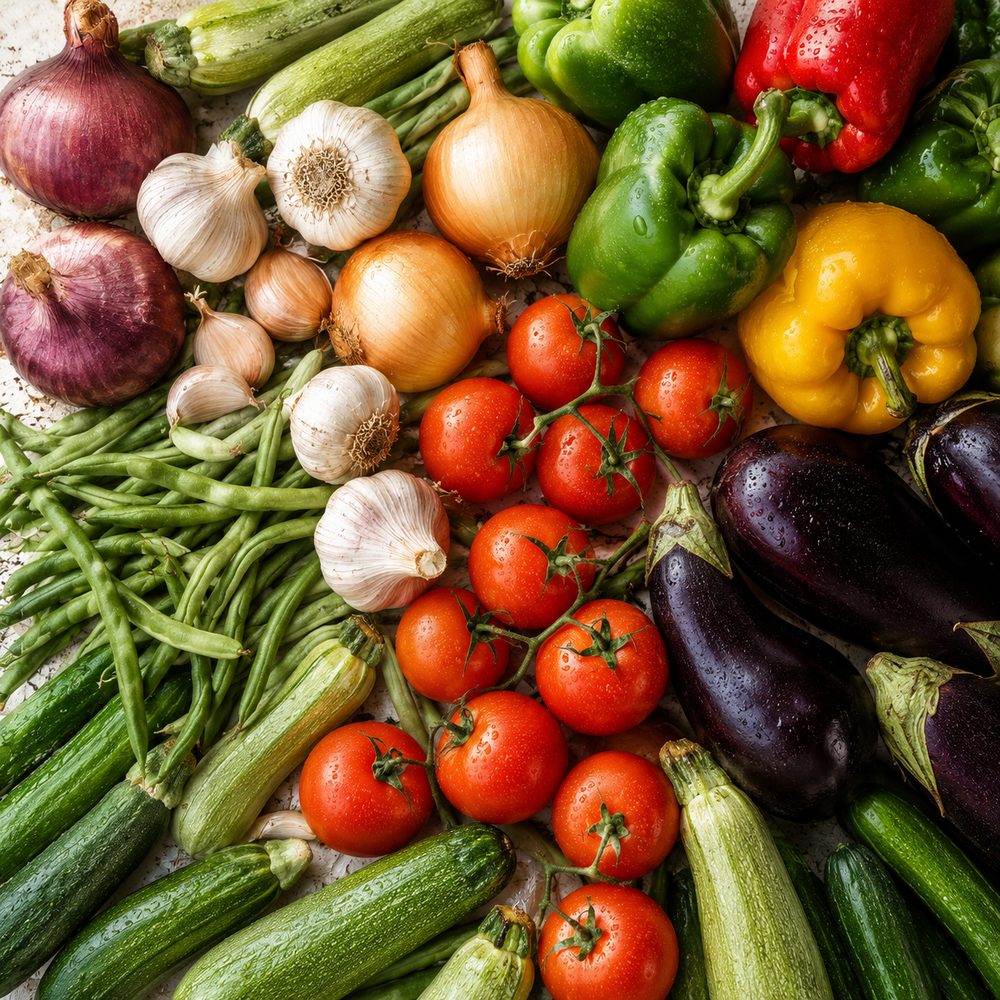
Greenhouse vegetable part-loads are the practical way for a mid-size buyer to take Egyptian bell pepper, cherry tomato and cucumber without committing a full reefer to any one of them. The Egyptian protected-cropping programme runs roughly November to May, peaking January to March, which is precisely when northern European and Central Asian greenhouse supply is at its thinnest and most expensive. The three products also sit close enough in temperature to share one container, which is what makes the part-load work.
Pack formats and half-pallet quantities
| Product | Standard carton | Cartons per half pallet | Net kg per half pallet | Set point |
|---|---|---|---|---|
| Bell pepper, coloured | 5 kg loose or 4 kg tray | 80 to 100 | 400 to 500 | 7 to 8 C |
| Cherry tomato | 250 g or 500 g punnets in 3 kg or 5 kg case | 100 to 140 | 300 to 600 | 10 to 12 C |
| Cucumber, Beit Alpha | 5 kg carton | 80 to 100 | 400 to 500 | 10 to 12 C |
Quantities vary with carton dimensions and stacking height, so treat the figures as planning numbers and confirm the exact count against the carton you are actually offered.
The set point that keeps all three sound
Cucumber is the constraint. Below about 10 degrees it develops pitting and water-soaked patches within a week, and the damage appears at the destination rather than at loading. Cherry tomato wants the same range. Bell pepper prefers 7 to 8 degrees but carries acceptably at 10 for transits of two weeks or less. So a three-product greenhouse part-load runs at 10 degrees, with the pepper accepting a slightly shorter shelf life as the price of sharing the box. Do not let a forwarder set the container to 5 degrees on the reasoning that colder is safer. It is not. The wider rules are in our note on reefer set point conflicts in mixed containers.
Ethylene is the second consideration. Cucumber is a strong responder to ethylene and yellows in its presence, so keep ripening fruit out of a load that carries cucumber, and specify a positive fresh air exchange rather than fully closed vents.
When to book
Volume opens in November, is reliable from December, and is at its best from January to March. April and May carry increasing heat risk in the houses, which shows as softer fruit and a shorter shelf life. Book December and January positions during October. Pairing the greenhouse products with open-field winter lines works well and fills a container more evenly; those crops are covered in Egyptian winter vegetable part-loads, though note that green beans and broccoli sit colder and are best kept to a separate load.
Peivana is the supplier here, not an impartial reviewer. Counts, weights and windows above are typical rather than guaranteed, and the offer for a given week depends on what the houses are actually cutting.
For a same-day quote on a greenhouse vegetable part-load, send your destination port, delivery week and the split you want across the three products to Peivana on WhatsApp at +20 10 9911 1918.